
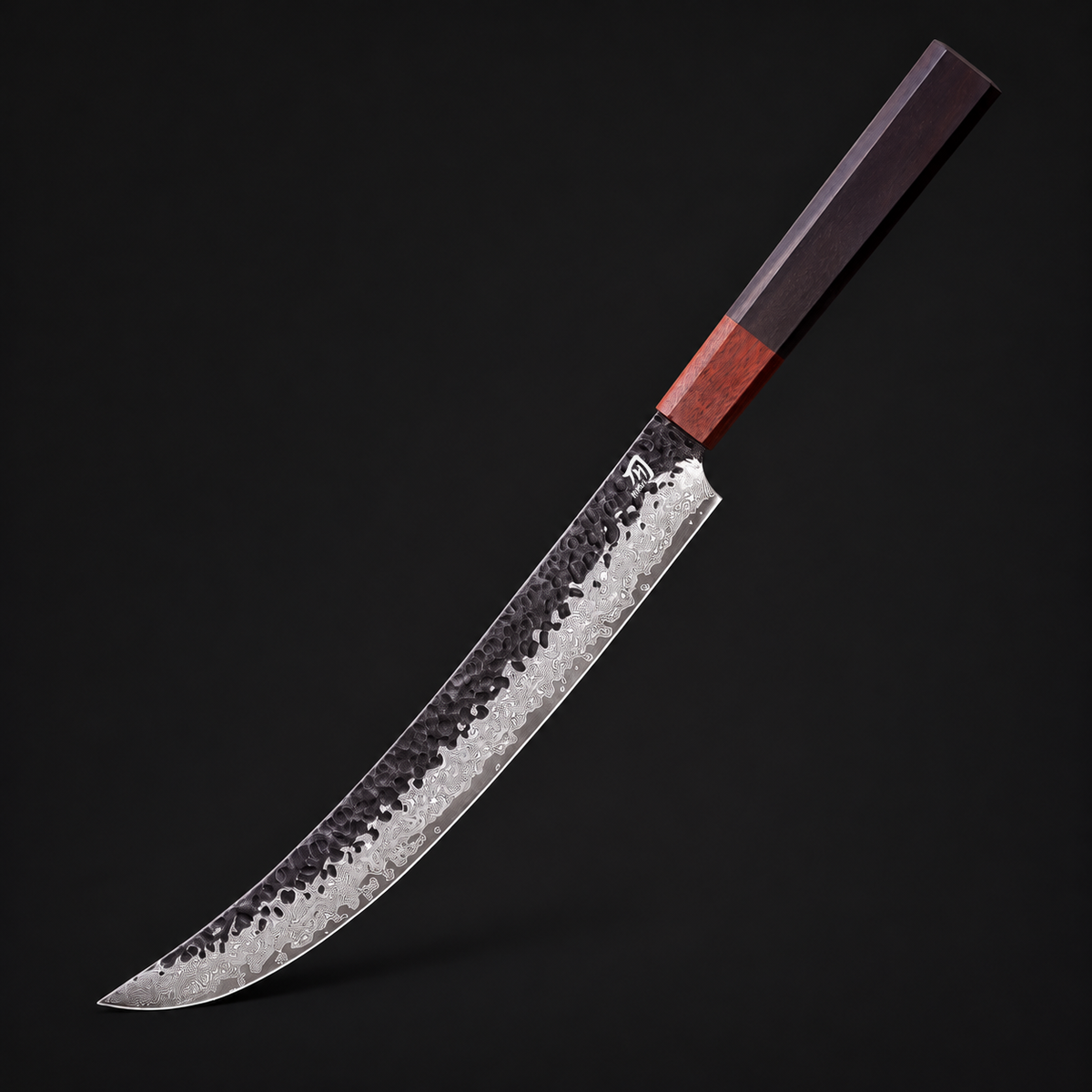
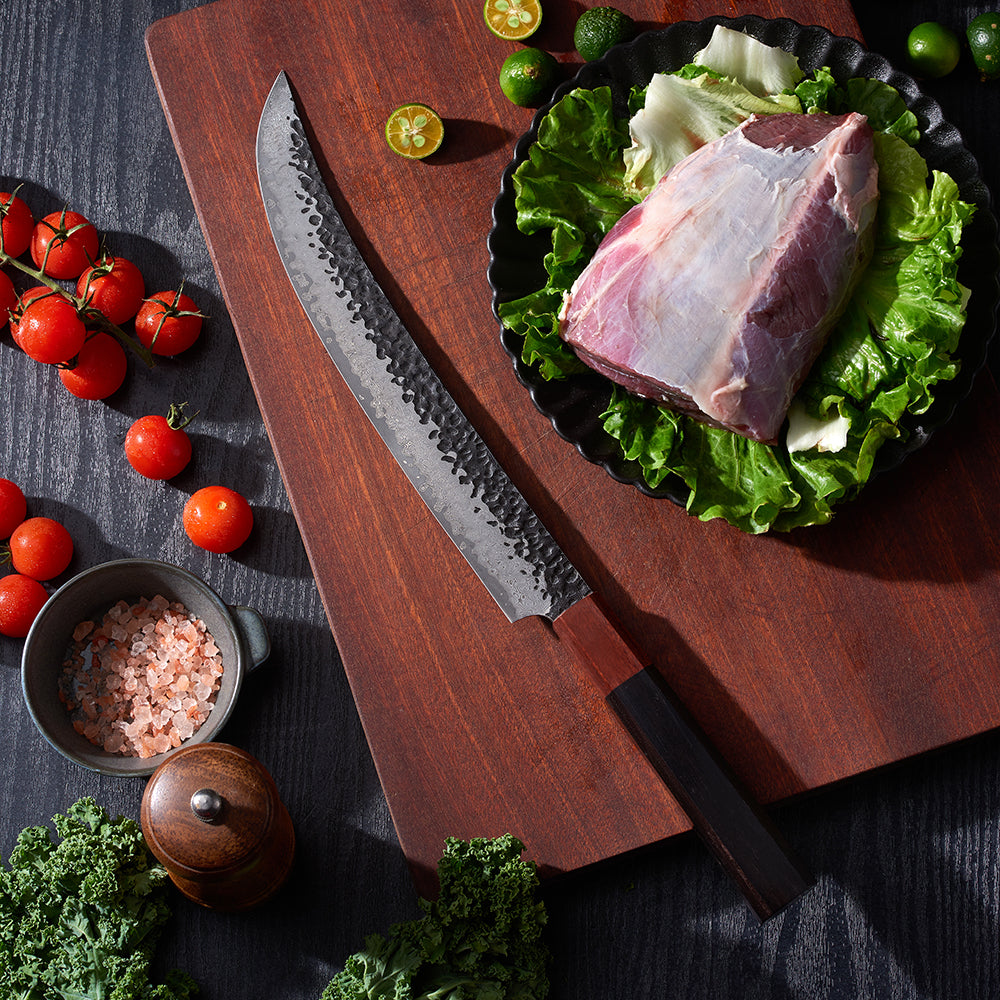
Slaughter Knife – Damascus Steel Knife with Ebony Handle for Meat Processing, Deboning, and Trimming
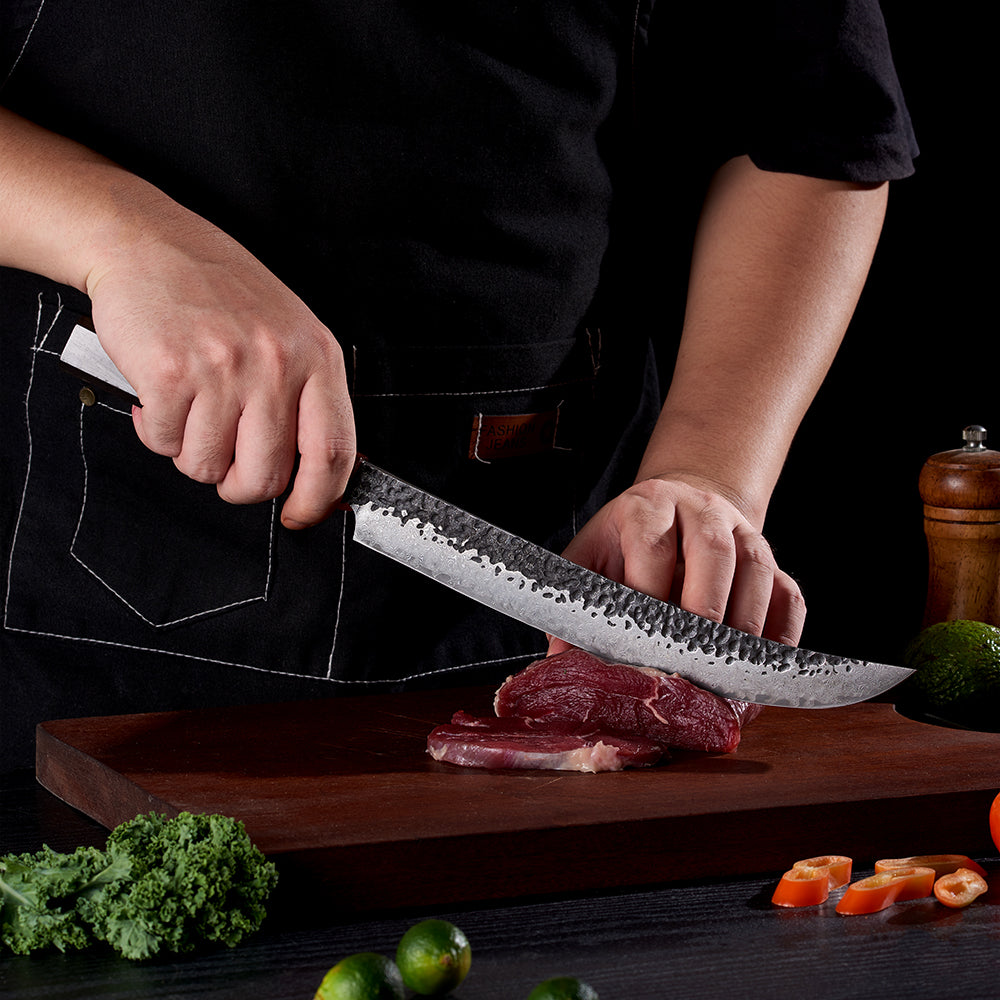
The Knife for Meat Cutting and Butchering / Slaughter Knife from Hikari Knife features a 25 cm blade designed for precise meat processing tasks like deboning, trimming fat, and slicing large cuts. It offers exceptional sharpness, edge retention, and durability. The ergonomic ebony handle ensures comfort and control, ideal for professional chefs, home cooking enthusiasts or butchers.
Description
Notice
- Avoid twisting or prying with the blade.
- Use a suitable knife for the task. Only cut bones, frozen foods or very hard ingredients with a knife specifically designed for them.
- Hand-wash and dry immediately. Do not soak or put in the dishwasher. Higher-carbon steel needs extra care to prevent rust; apply a little food-safe mineral oil before extended storage.
- Use a wooden or soft plastic cutting board to protect the edge.
- Avoid sudden temperature changes and direct heat.
- Store safely in a sheath, knife block or suitable holder to protect the blade and prevent injury.
Each handmade knife may vary slightly in colour, pattern, dimensions and weight from the product images and specifications.
For care advice or questions, please contact us.
Complete your setup

Dual-Sided Whetstone for Knife Sharpening – 3000/8000 Grit Set for Professional Sharpening
Sharpener
197,39 lei RON
299,99 lei RON


Hikari Wooden Magnetic Knife Rack – Kitchen Countertop Organizer
364,79 lei RON
499,99 lei RON
Slaughter Knife – Damascus Steel Knife with Ebony Handle for Meat Processing, Deboning, and Trimming
Sale price580,79 lei
Regular price694,99 lei (/)
THIS KNIFE
Measurements & Specifications.

| Blade length | 244 mm |
|---|---|
| Total length | 388 mm |
| Handle length | 144 mm |
| Blade width | 23 mm |
| Blade thickness | 2.8 mm |
| Knife weight | 196 g |
| Edge angle | 15° |
Converted values are rounded.


More from this collection
Complete your collection.
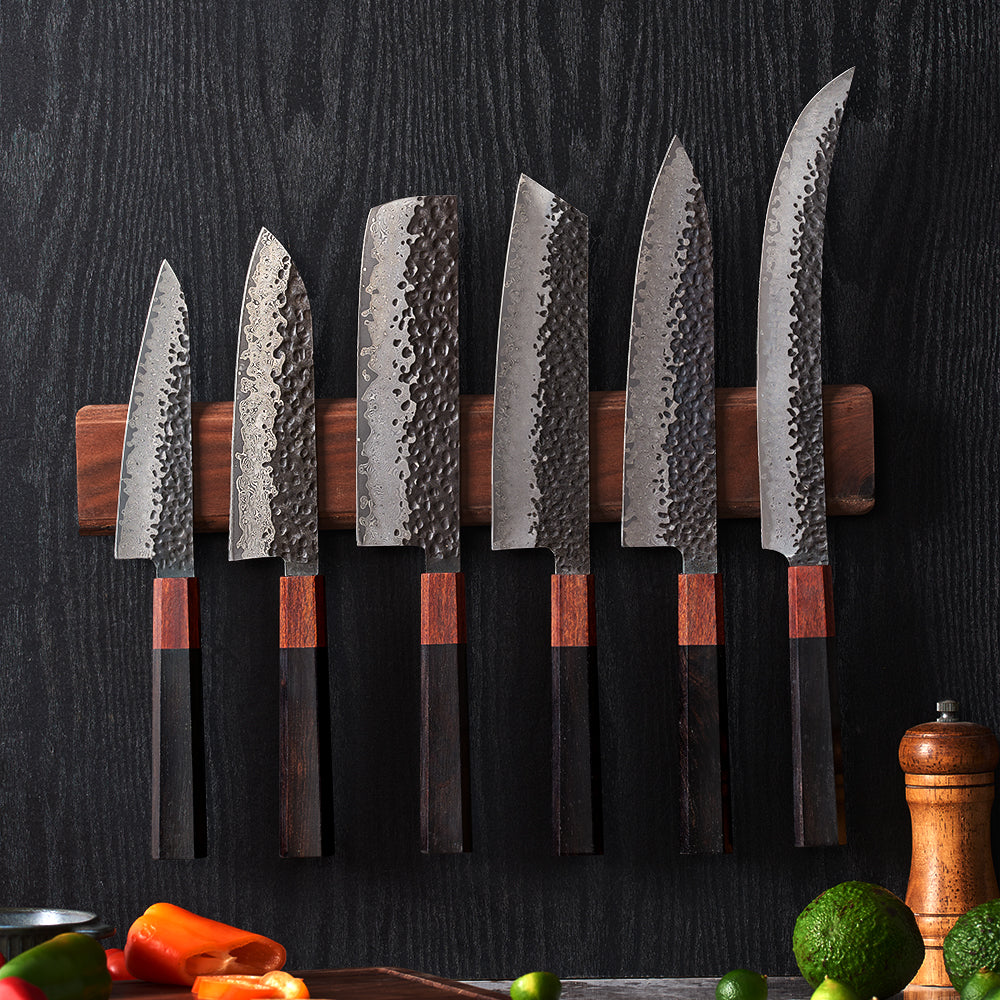
Explore the other blade shapes in this range and find a knife for a different task.

Gyuto
Everyday preparation
Professional Chef Kitchen Knife, Hikari Knife - Japanese Style, Professional 67-Layer Damascus Steel, Ergonomic Ebony HandleA versatile chef profile for everyday slicing, dicing and chopping.
649,99 lei RON 516,99 lei RON

Santoku
Everyday slicing and chopping
Universal Santoku Kitchen Knife, Hikari – VG -10 Damascus Blade, Ebony Wood HandleAn all-round profile for preparing vegetables, boneless meat and other everyday ingredients.
639,99 lei RON 507,59 lei RON

Kiritsuke
Slicing and precise preparation
Professional Kiritsuke Knife – Japanese - Style VG -10 Damascus Kitchen Knife with Ebony HandleA pointed blade profile for controlled slicing and precise ingredient preparation, suited to the individual model’s design.
599,99 lei RON 512,29 lei RON

Nakiri
Vegetable preparation
Nakiri Knife, Hikari – High-Quality Damascus Kitchen Knife, Ebony Handle for Precision Vegetable Cutting and ChoppingA broad blade profile for slicing and chopping vegetables.
609,99 lei RON 518,39 lei RON

Petty
Smaller preparation tasks
Professional Petty Knife – Versatile Damascus Knife with Ebony Handle for Precision Slicing and Decorative CuttingA smaller knife for trimming, portioning and detailed ingredient preparation.
484,99 lei RON 345,59 lei RON
Swipe or scroll to exploreView the full collection
Unable to load more knives. Try again or view the full collection.

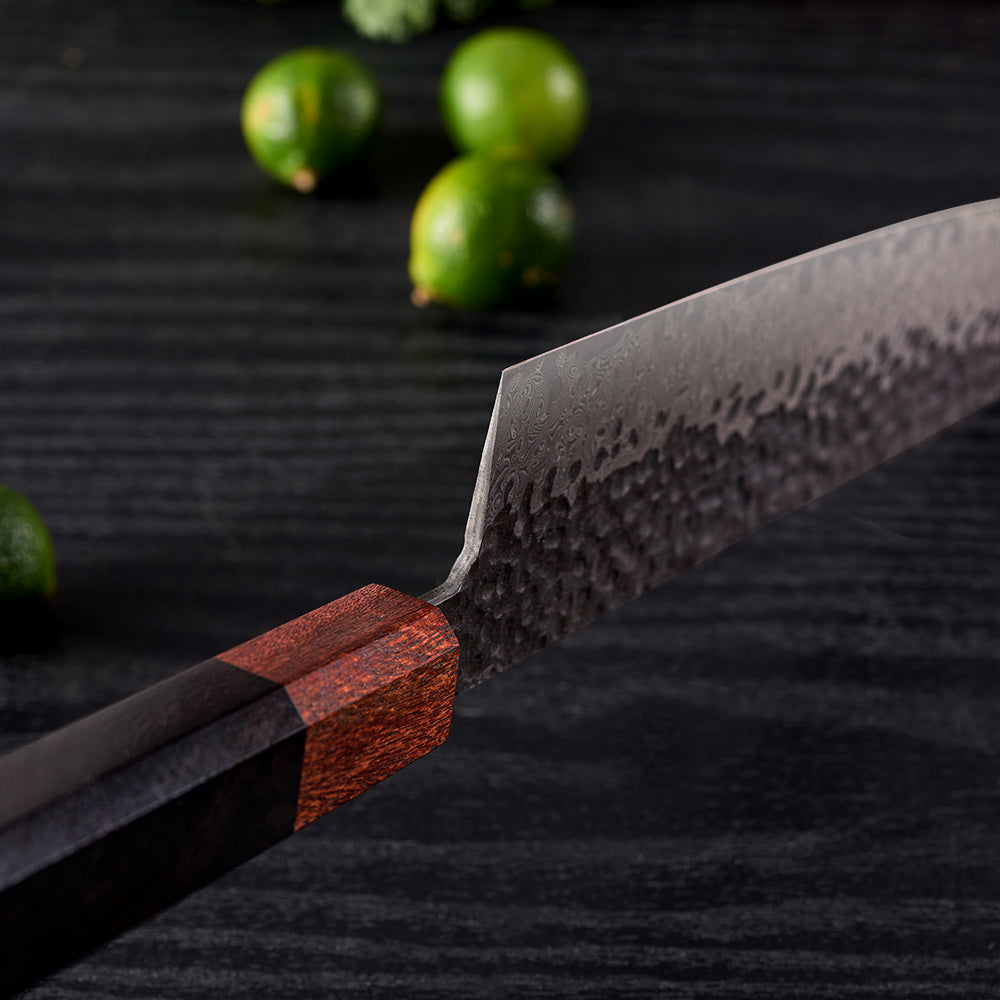
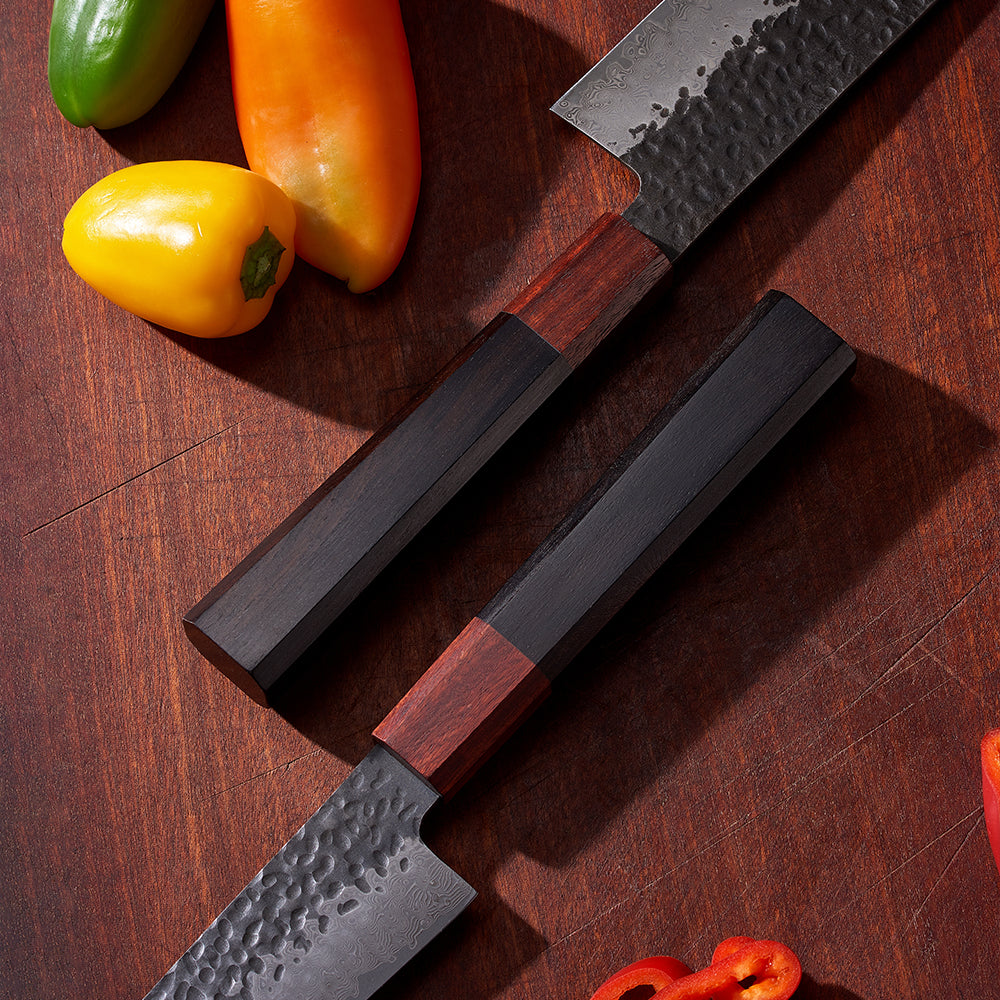
Kurouchi Damascus & Octagonal Ebony
Dark kurouchi steel. Eight facets of ebony.
View the full collection
The Hikari promise
10-year warrantyCover for manufacturing defects. Conditions apply.
Sharp out of the boxNo initial sharpening needed.
Free shippingPlease check for International terms.
14-day returnsUnused items. Return conditions apply.
Secure checkoutEncrypted checkout for your payment.
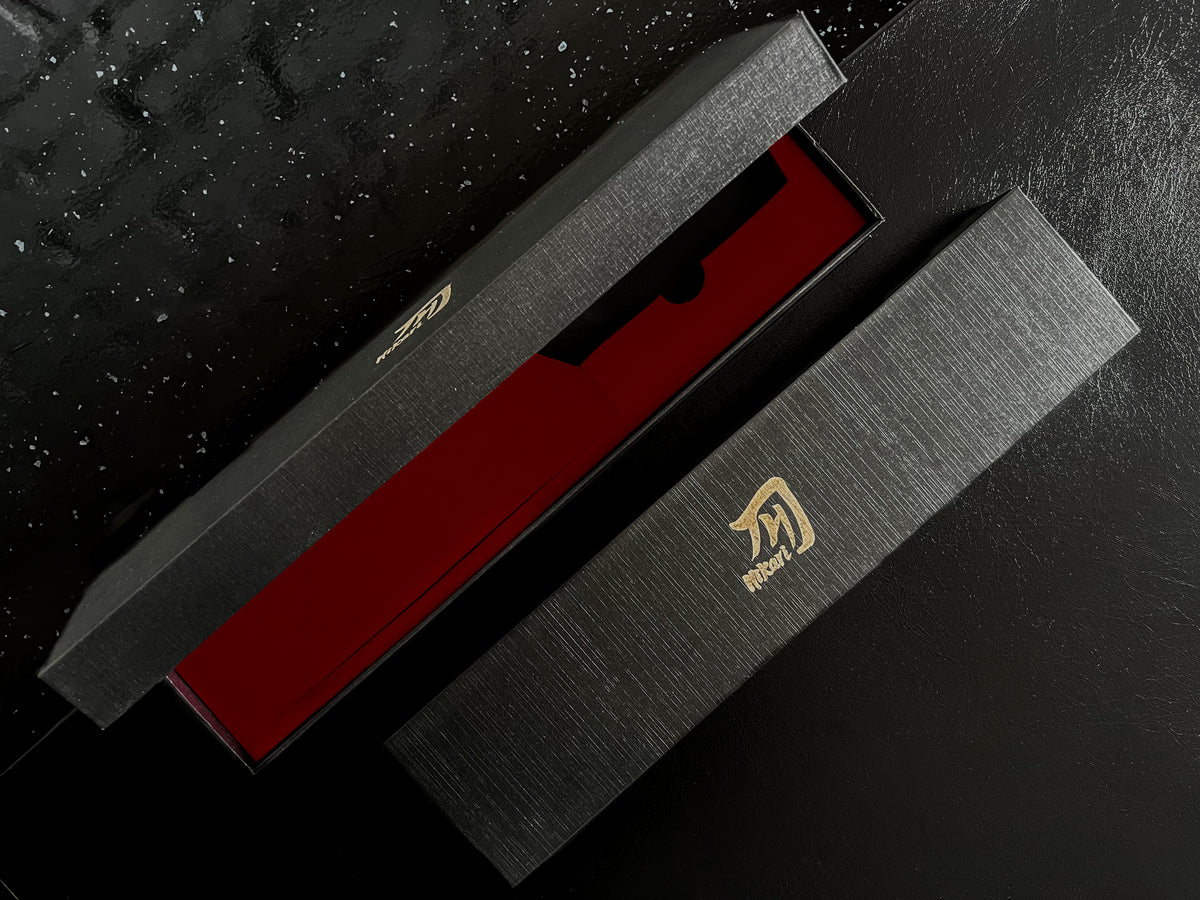
Presentation
Ready for your kitchen. Presented in a Hikari box.
Knife care
Simple care. Every day.
Keep your knife ready for the next meal with a few simple habits.
- Wash by hand
- Dry immediately
- Protect the edge
What is the daily care routine?
How should I store my knife?
How do I keep the edge sharp?
What should I avoid?
Use each knife for its intended tasks. Avoid twisting or prying with the blade. Do not cut bones or frozen food unless the knife is specifically designed for that purpose.
A little help choosing
Not sure which knife is right for you?