


01 / THE BLADE
Cart
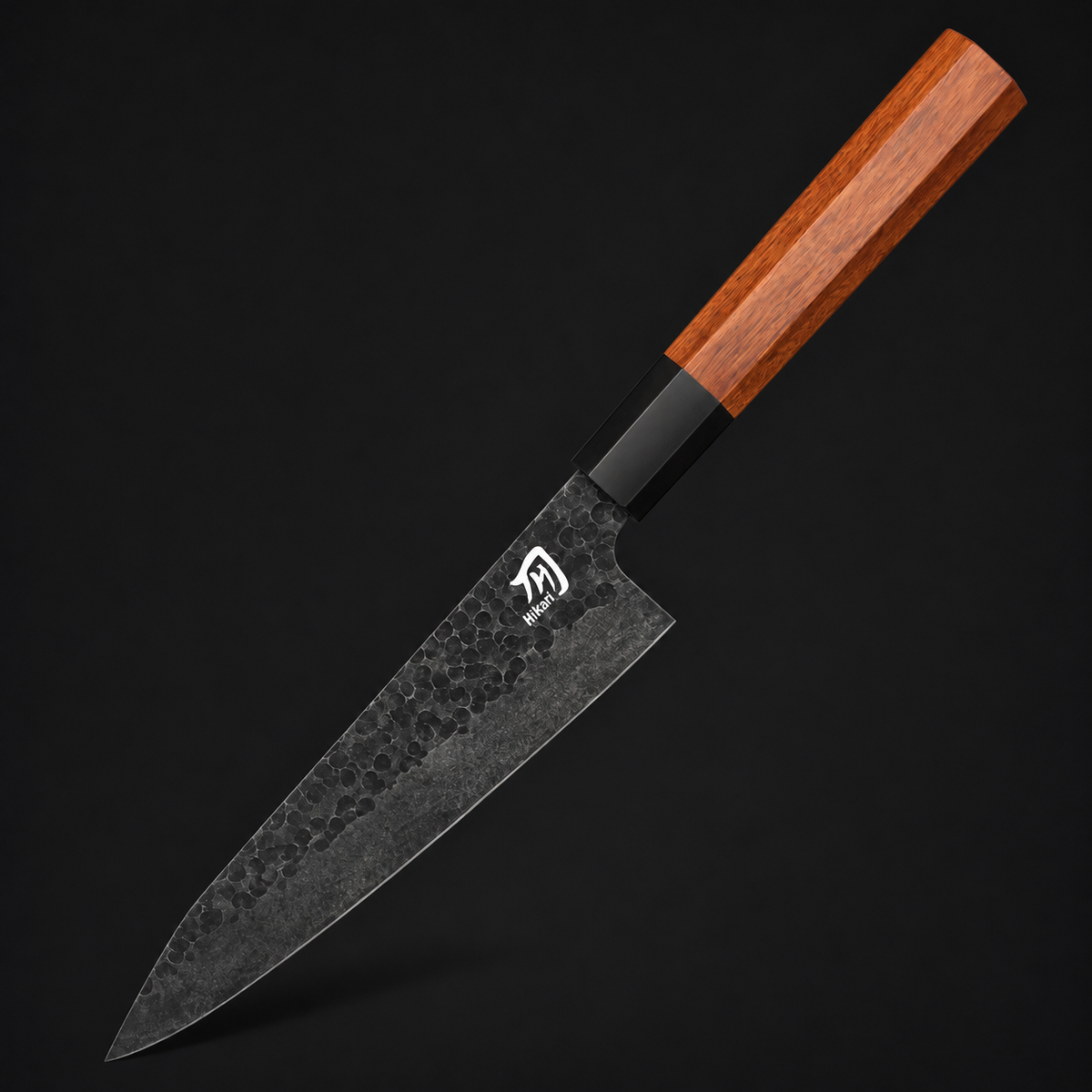
440C Carbon Steel / Japanese Handle
Trending this month
Order note
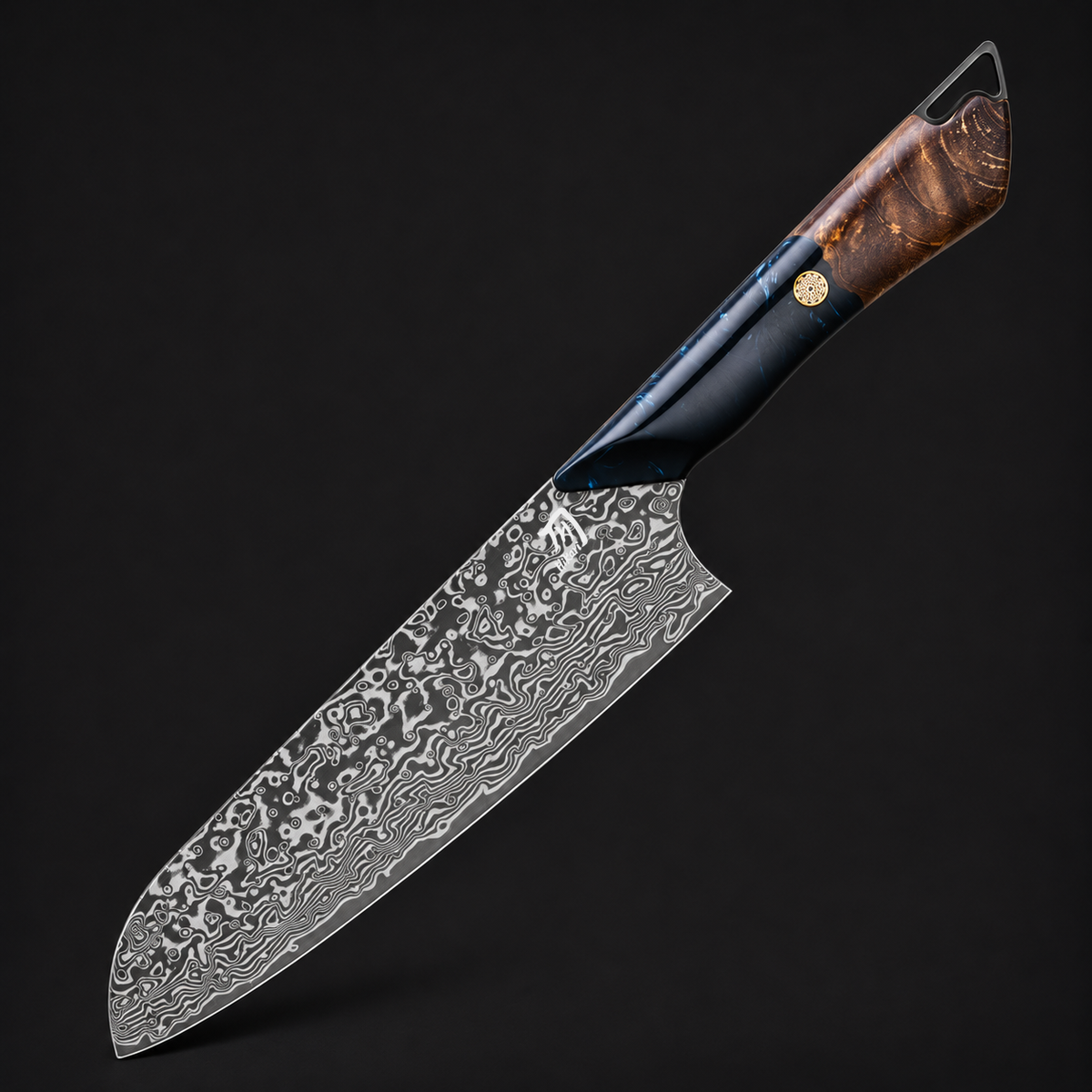
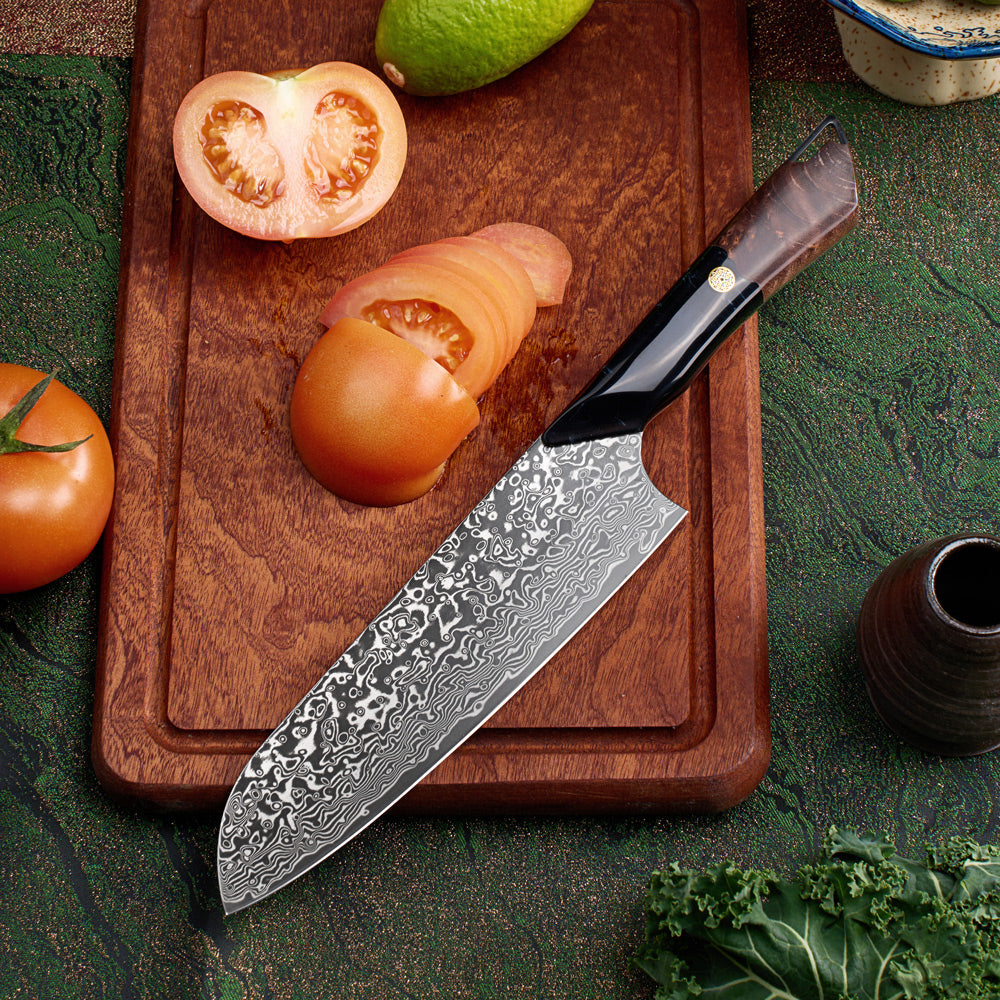
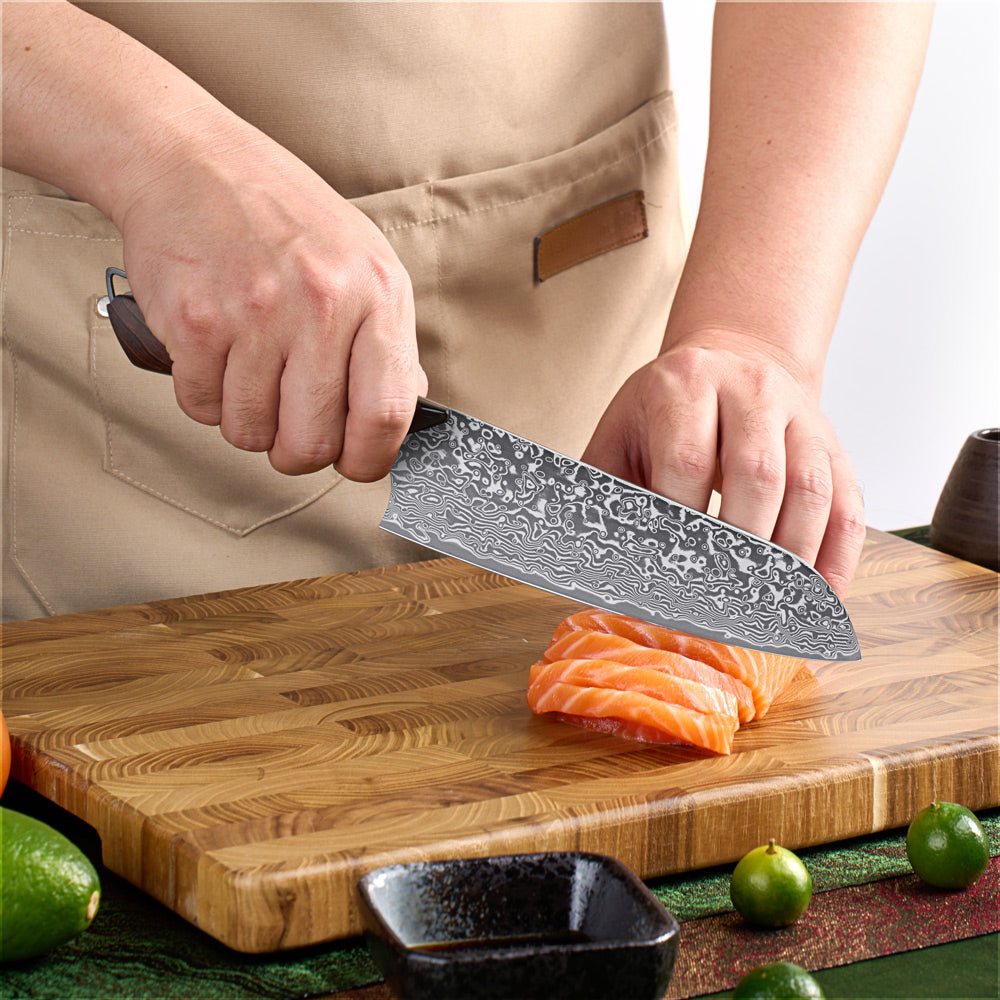
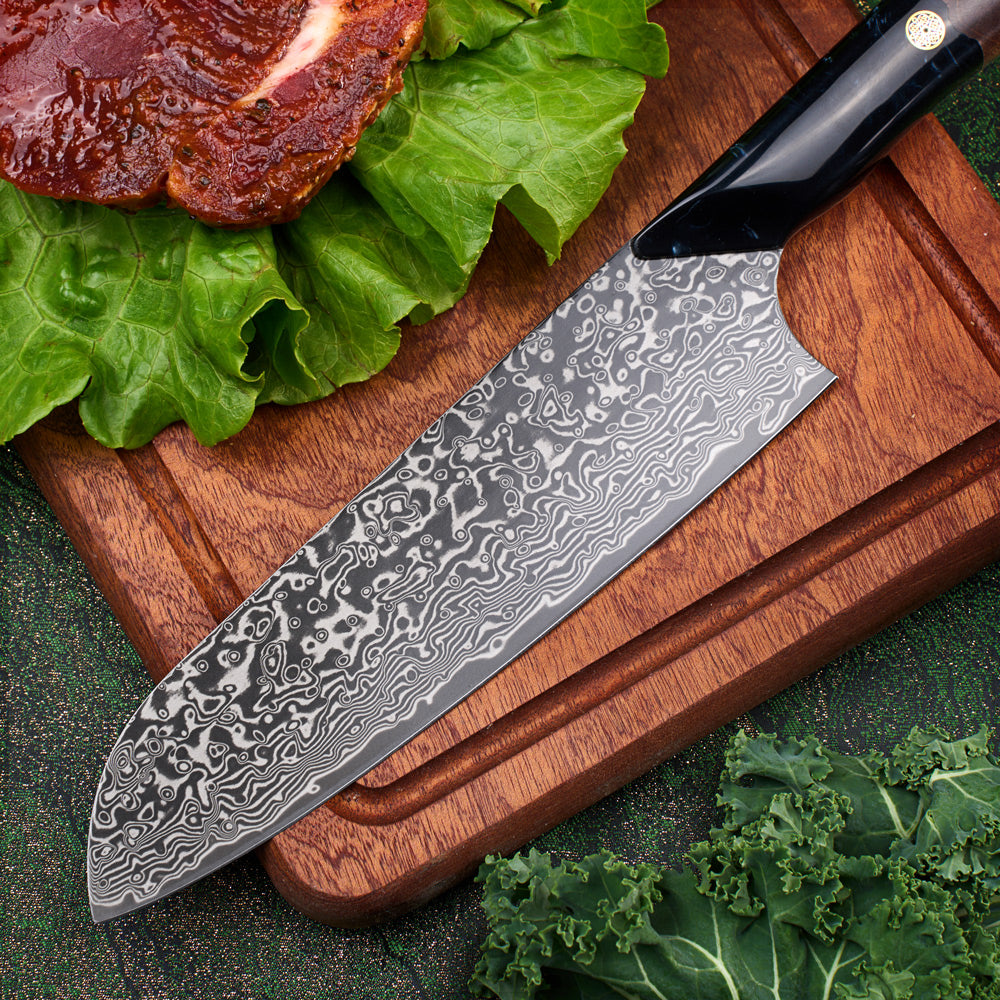
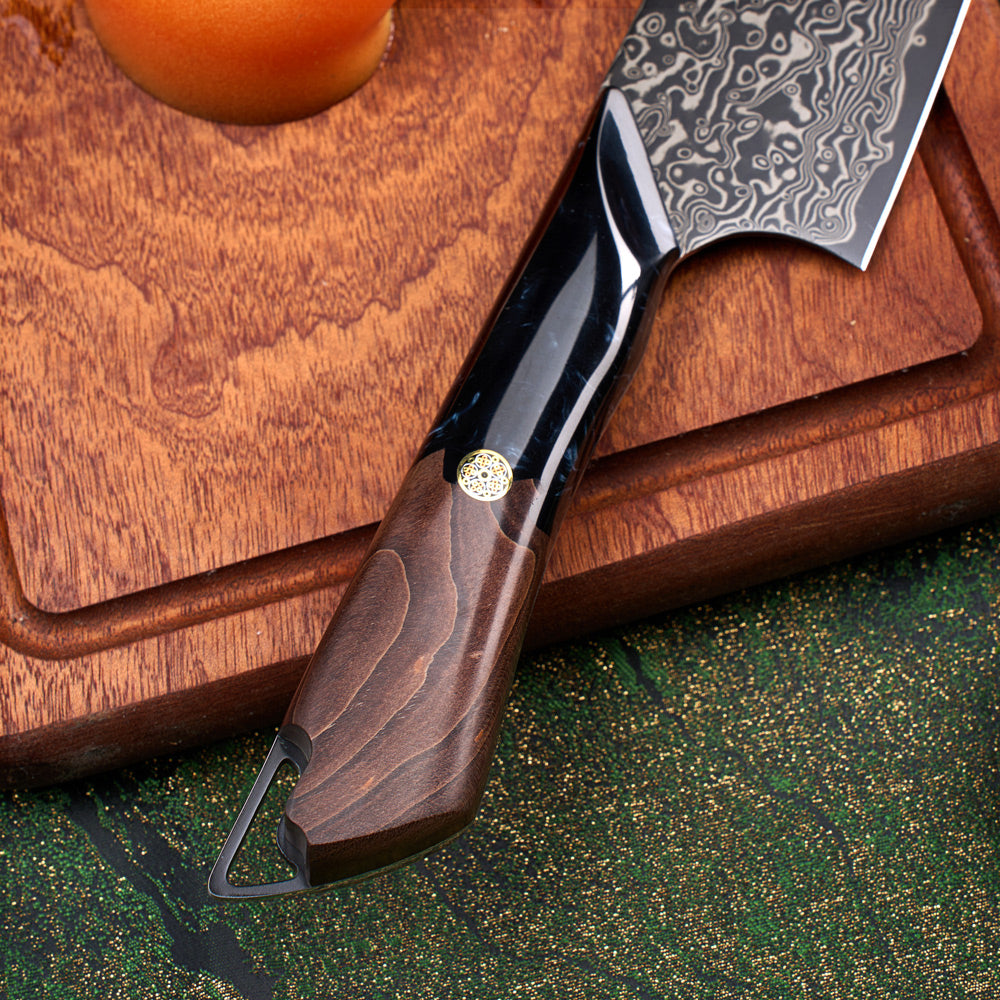
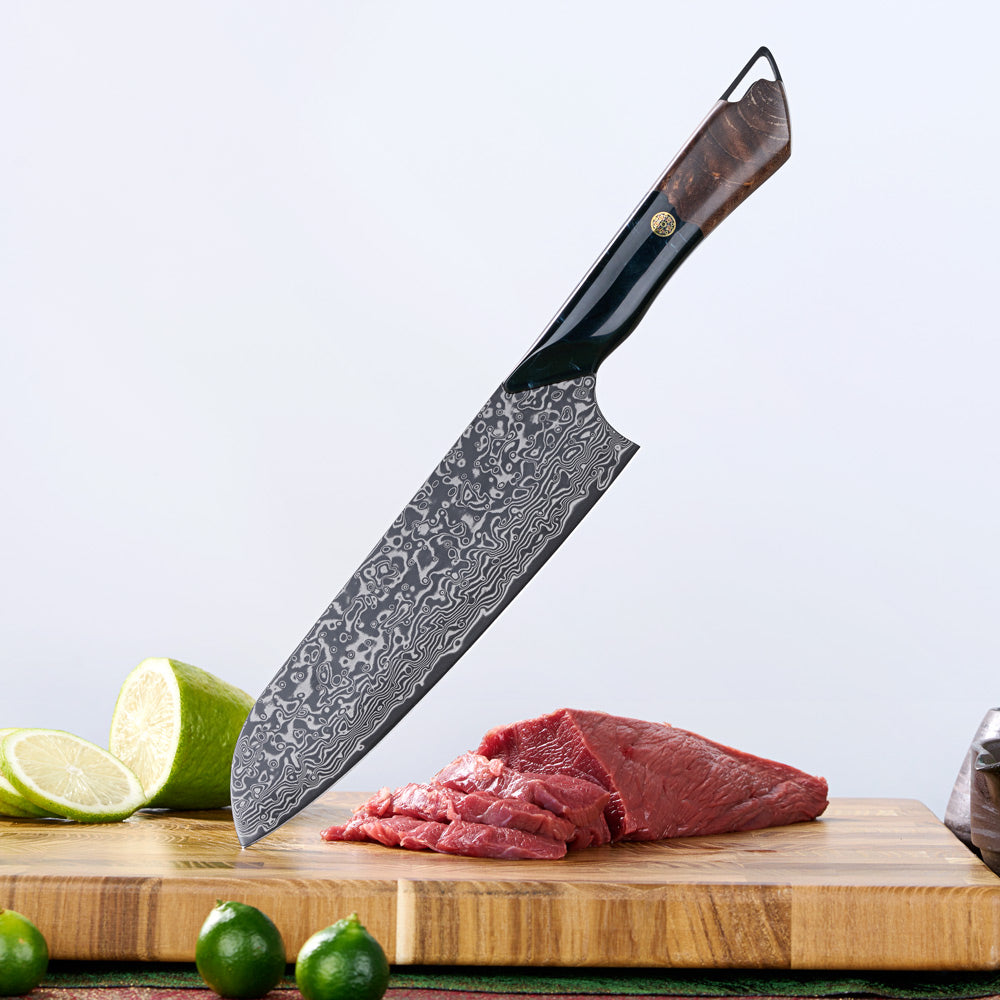
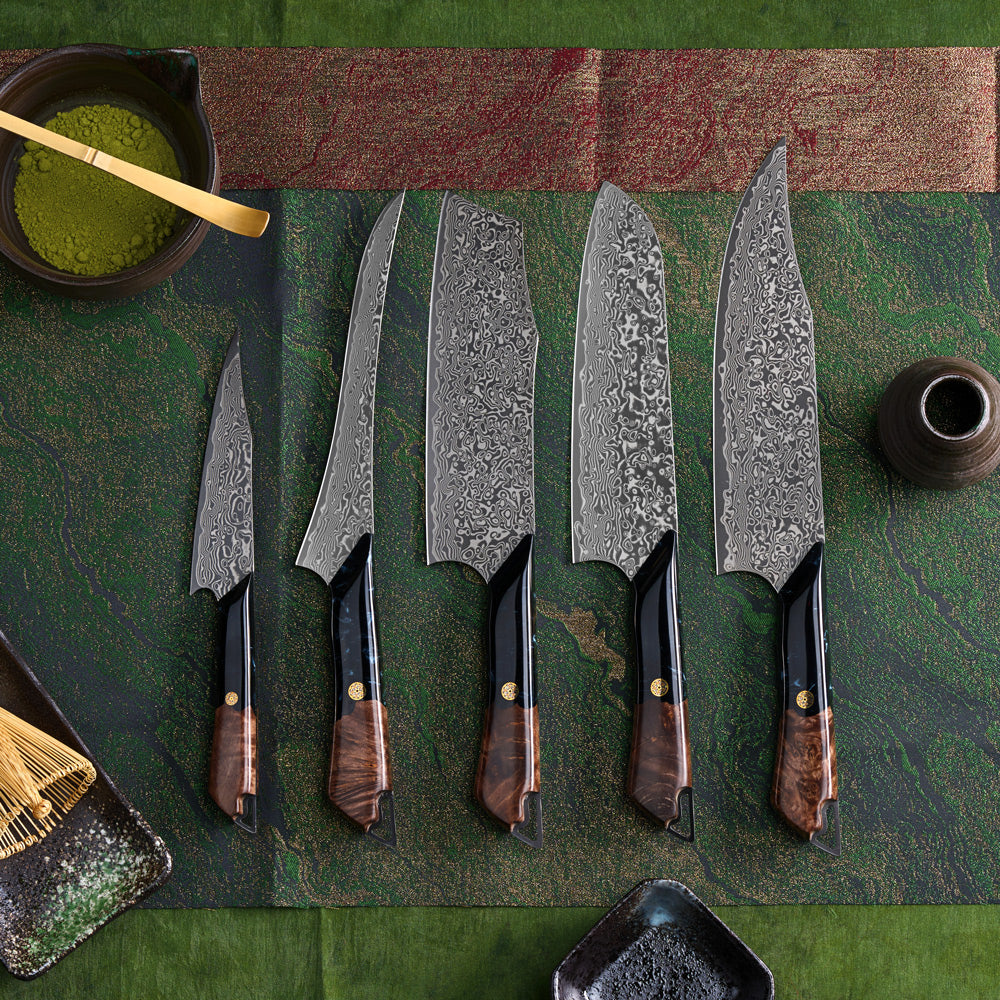
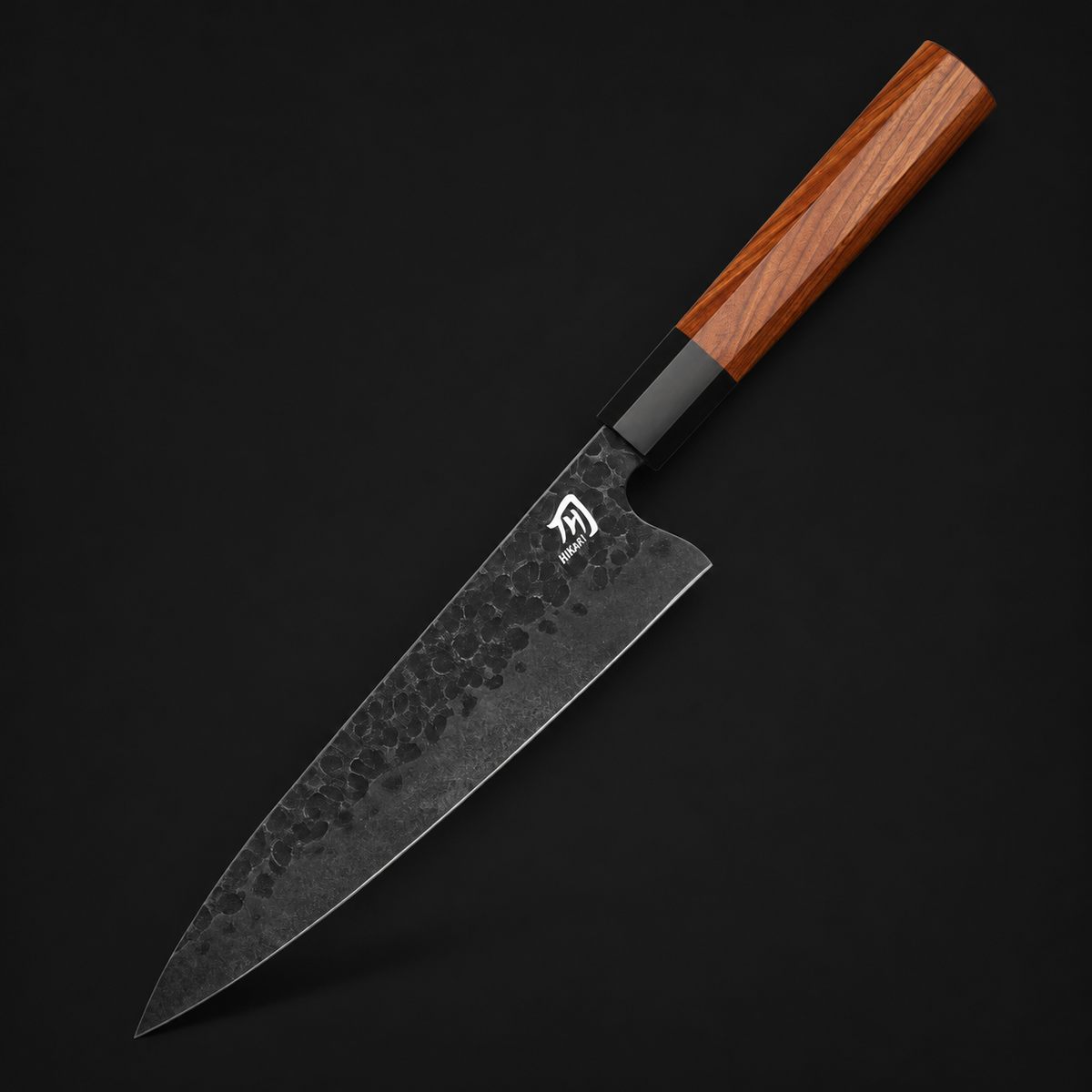
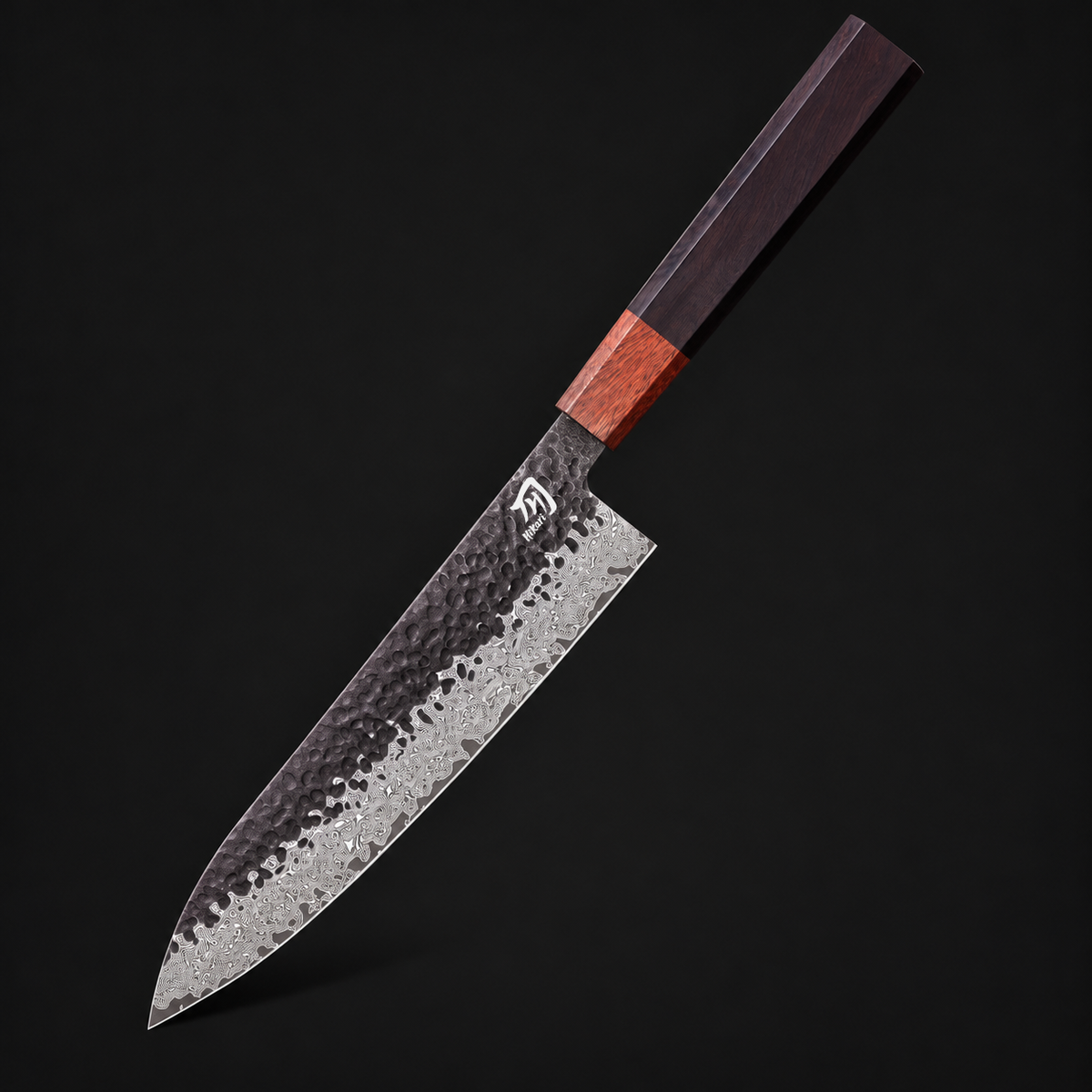
The Hikari Damascus Santoku Knife is a Japanese-style kitchen knife designed for slicing, dicing, and chopping vegetables, boneless meat, and fish. Featuring a 181 mm blade made from 67-layer Damascus steel with VG10, it combines a distinctive Damascus pattern with a fine 9–12° edge angle per side. The contoured maple and resin handle with a decorative mosaic rivet completes its refined design, making this 7-inch Santoku knife a versatile addition to home and professional kitchens.
Each handmade knife may vary slightly in colour, pattern, dimensions and weight from the product images and specifications.
For care advice or questions, please contact us.

Sharpener
$49.00 USD
$70.00 USD

$88.00 USD
$116.00 USD
THIS KNIFE

| Blade length | 181 mm |
|---|---|
| Total length | 313 mm |
| Handle length | 132 mm |
| Blade width | 54 mm |
| Blade thickness | 2 mm |
| Knife weight | 190 g |
| Edge angle | 12° |
Converted values are rounded.
More from this collection
Explore the other blade shapes in this range and find a knife for a different task.

Everyday preparation
Hikari Premium Chef Knife – 8-Inch VG10 Damascus Blade with Maple & Resin HandleA versatile chef profile for everyday slicing, dicing and chopping.
$208.00 USD $181.00 USD

Smaller preparation tasks
Professional Petty Knife, Hikari – Small Kitchen Knife, Damascus Steel and VG -10, Maple and Resin HandleA smaller knife for trimming, portioning and detailed ingredient preparation.
$146.00 USD $116.00 USD

Vegetable preparation
Premium Nakiri, Hikari – Vegetable Knife, Damascus and VG-10 Steel Blade, Maple and Resin HandleA broad blade profile for slicing and chopping vegetables.
$196.00 USD $166.00 USD

Trimming and working around bones
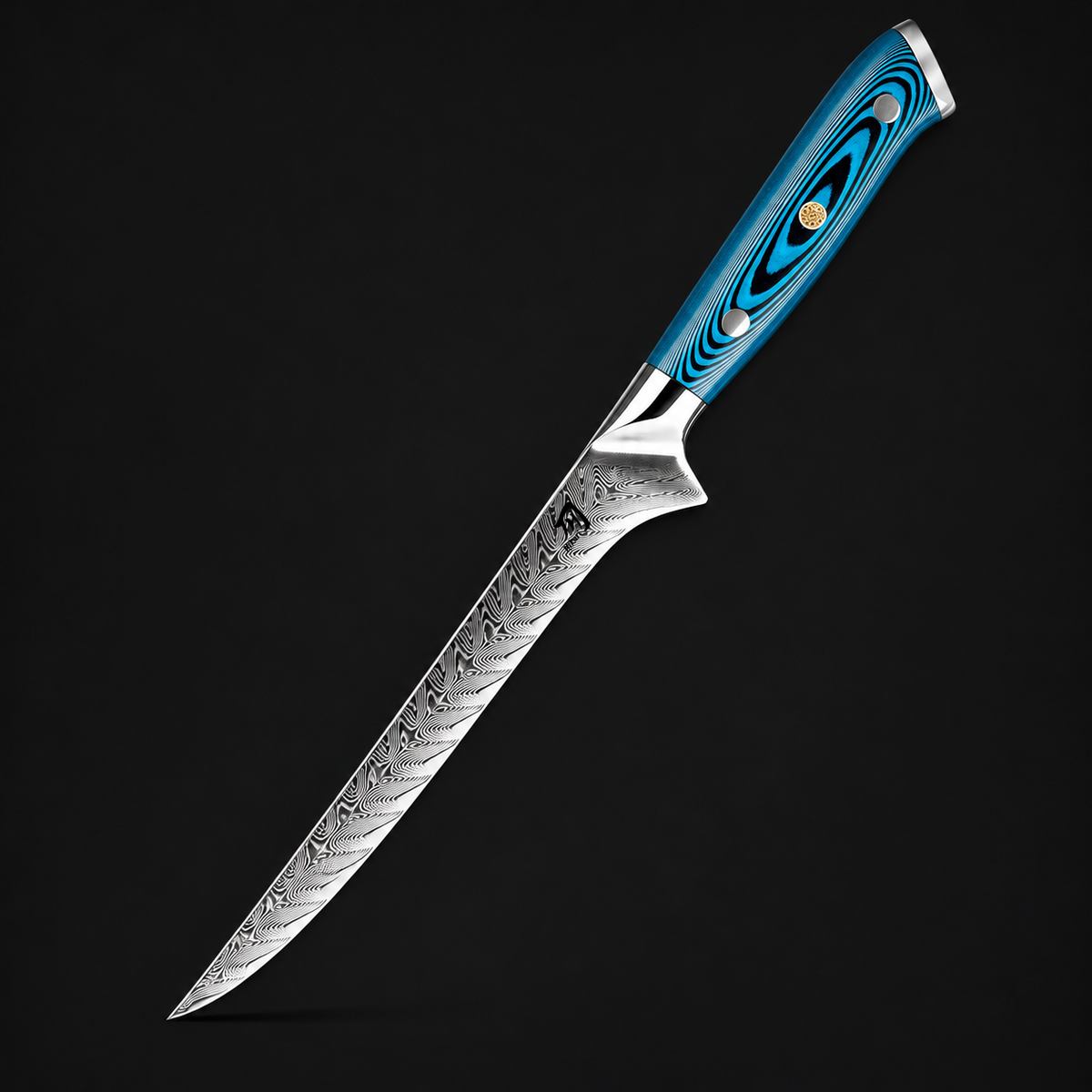
Hikari Damascus Boning Knife – 7-Inch VG10 Blade with Maple & Resin HandleFor trimming meat and working around bones with controlled cuts. Use the technique appropriate to the individual model.
$159.00 USD $125.00 USD
Unable to load more knives. Try again or view the full collection.

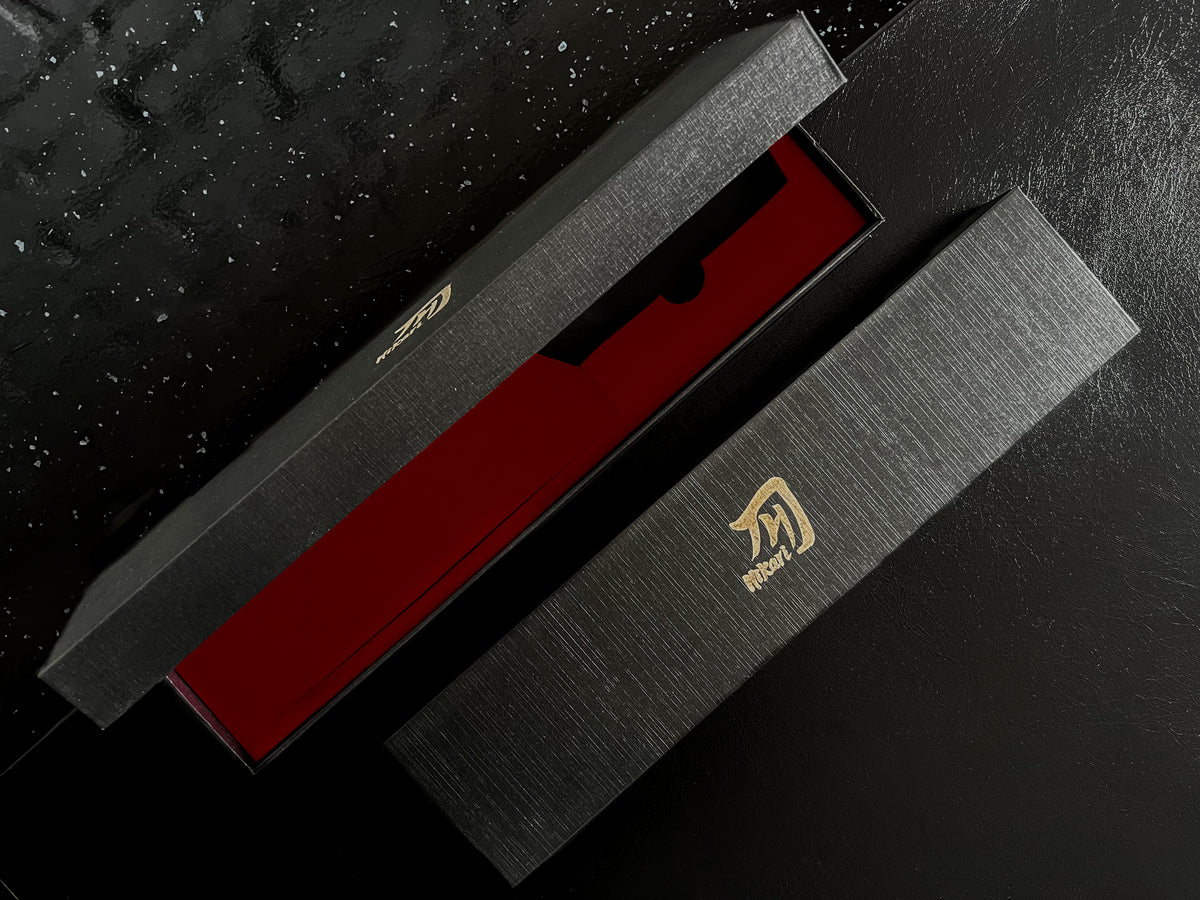
Presentation
Knife care
Keep your knife ready for the next meal with a few simple habits.
Use each knife for its intended tasks. Avoid twisting or prying with the blade. Do not cut bones or frozen food unless the knife is specifically designed for that purpose.
A little help choosing