Santoku vs Chef Knife: Which Kitchen Knife Should You Buy?
Choosing between a Santoku knife and a Chef Knife is one of the most common questions for home cooks and anyone upgrading their kitchen tools. Both are highly versatile, both can handle everyday food preparation, and both deserve a place in a well-equipped kitchen. But when comparing Santoku vs Chef Knife, the right choice depends on how you cook, what ingredients you prepare most often, and which blade style feels most natural in your hand.
If you are deciding between a Santoku or Chef Knife, this guide will help you understand the key differences in blade shape, cutting style, versatility, and ideal use. Whether you want a compact knife for precise daily prep or a classic workhorse for almost every kitchen task, knowing the strengths of each blade will help you choose with confidence.
At Hikari Knife, both styles are essential parts of a premium Japanese-inspired kitchen setup. You can explore our Santoku Knives collection for versatile everyday performance or browse our Chef Knives for classic all-purpose cutting power.
What Is a Santoku Knife?

A Santoku knife is a Japanese-style multi-purpose kitchen knife designed for slicing, dicing, and mincing. It is widely appreciated for its excellent balance, compact feel, and controlled cutting style. The word “Santoku” is often associated with the idea of three virtues, referring to its ability to handle meat, fish, and vegetables effectively.
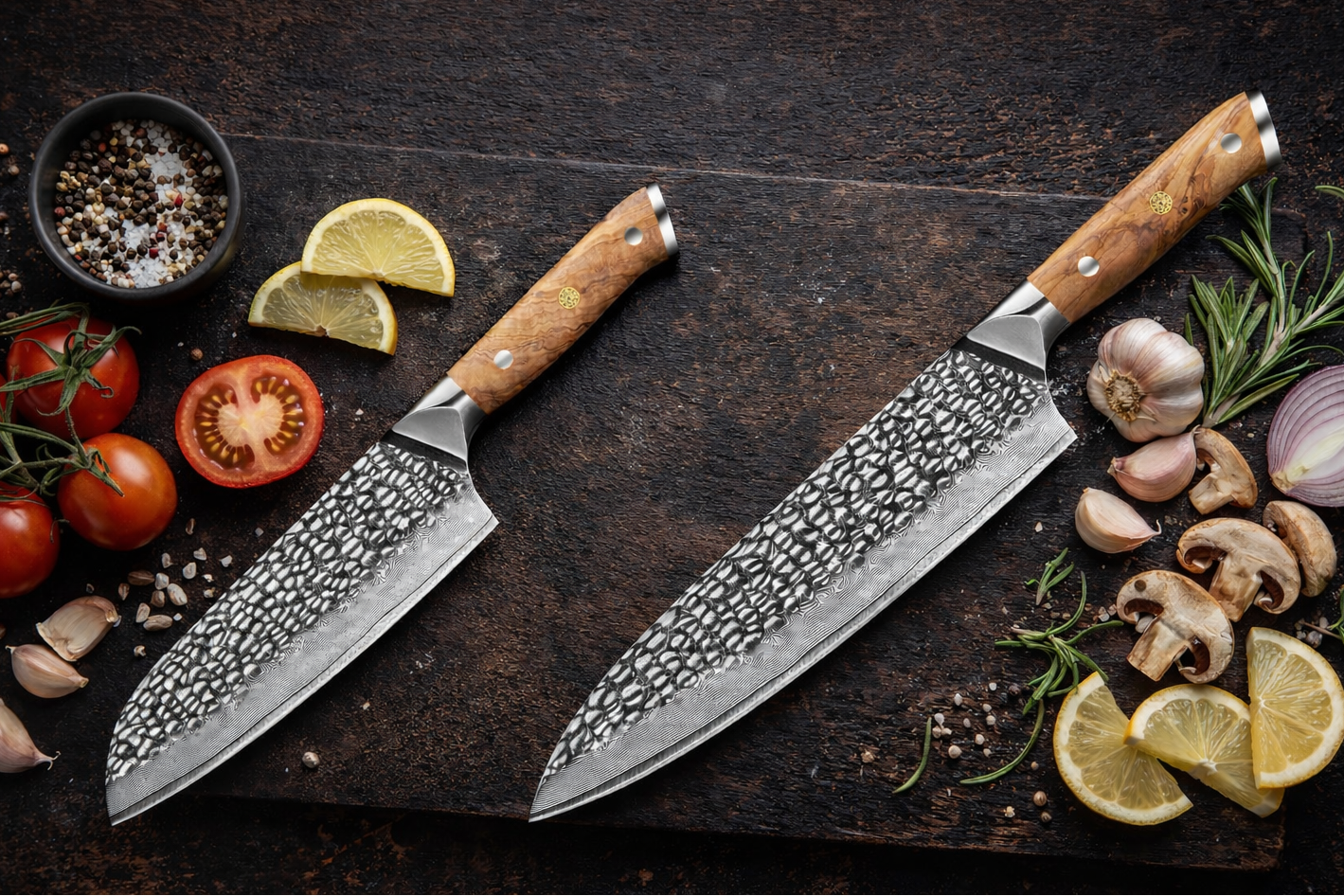
Compared to a traditional chef knife, a Santoku usually has a slightly shorter, wider blade, a flatter cutting edge, and a sheepsfoot-style tip. This shape makes it especially comfortable for straight chopping and push-cutting motions, which is one reason many home cooks love it for everyday prep.
A Santoku is especially useful for:
- Vegetable preparation
- Boneless meat
- Fish and delicate proteins
- Herbs and smaller ingredients
- Fast, controlled daily prep
If you want a knife that feels precise, efficient, and easy to manage, a Santoku is often an excellent choice.
What Is a Chef Knife?

A Chef Knife, often called a Gyuto in Japanese knife terminology, is one of the most versatile knives in the kitchen. It is designed to handle a wide range of tasks, from slicing and chopping to dicing and mincing. For many cooks, it is the single most important knife in their collection.
Compared with a Santoku, a Chef Knife typically features a longer blade, a more pointed tip, and a more curved edge. This makes it especially effective for rocking motions, larger ingredients, and broader all-purpose kitchen work.
A Chef Knife is especially useful for:
- General all-purpose cutting
- Larger vegetables and herbs
- Slicing proteins
- Rocking cuts
- One-knife kitchen versatility
If you want one blade that can do almost everything, a Chef Knife is often the safest and most practical choice.
Santoku vs Chef Knife: The Main Differences
When comparing Santoku vs Chef Knife, the biggest differences come down to blade shape, cutting motion, precision, and overall versatility.
1. Blade Shape
A Santoku usually has a flatter edge and a more rounded sheepsfoot-style tip. A Chef Knife usually has a curved edge and a pointed tip. This changes not only the look of the knife, but also how it performs on the cutting board.
2. Cutting Style
A Santoku is ideal for up-and-down chopping, push-cutting, and controlled slicing. A Chef Knife is better suited to cooks who prefer a rocking motion while cutting herbs, onions, and other ingredients.
3. Blade Length
Santoku knives are often slightly shorter, which makes them feel more compact and approachable. Chef Knives are usually longer, giving you more cutting surface and more range for larger ingredients.
4. Precision and Control
Many cooks find the Santoku easier to control, especially during precise prep work. Its flatter profile and slightly shorter blade can make it feel more direct and less intimidating in everyday cooking.
5. Versatility
Both knives are versatile, but the Chef Knife usually has the edge when it comes to true all-purpose use. If you want one knife for almost everything, a Chef Knife is often the broader all-rounder.
Santoku vs Chef Knife: Quick Answer
If you want the shortest answer possible:
- Choose a Santoku if you want a compact, precise knife for vegetables, fish, boneless meat, and daily home cooking.
- Choose a Chef Knife if you want a larger all-purpose kitchen knife that handles almost every task with ease.
Neither is universally better. The best option depends on your cooking style.
When a Santoku Knife Is the Better Choice

A Santoku knife is often the better choice for cooks who value control, efficiency, and clean straight cuts. It shines in home kitchens where vegetables, herbs, fish, and boneless meats are prepared regularly.
You may prefer a Santoku if:
- You cook a lot of vegetables
- You want a lighter, more compact blade
- You prefer push cuts over rocking cuts
- You want excellent control during prep
- You are looking for a versatile Japanese-style knife for everyday cooking
For many home cooks, the Santoku feels intuitive from the first use. It is a great choice for people who want a knife that performs beautifully without feeling oversized.
When a Chef Knife Is the Better Choice

A Chef Knife is often the better option if you want maximum versatility and the flexibility to handle a wide range of ingredients and cutting styles. It is especially useful when you want one knife to become your primary kitchen workhorse.
You may prefer a Chef Knife if:
- You want one main knife for almost every task
- You cut larger ingredients often
- You use a rocking motion while chopping
- You like a longer blade with more reach
- You want a classic chef knife profile with broad kitchen versatility
If your goal is to buy one dependable knife and use it for nearly everything, a Chef Knife is hard to beat.
Is a Santoku Better Than a Chef Knife for Vegetables?
For many cooks, yes. A Santoku is often especially comfortable for vegetables because of its flatter edge and efficient chopping style. It makes excellent contact with the cutting board and helps produce clean, even cuts with good control.
If your kitchen routine includes lots of produce, herbs, and quick weeknight prep, a Santoku may feel faster and more natural to use. That is one reason it is such a popular choice for home cooks who want a versatile Japanese kitchen knife focused on practical everyday performance.
Is a Chef Knife Better Than a Santoku for Beginners?
Not always. Many people assume a Chef Knife is automatically the best knife for beginners, but that is not true for everyone.
A Santoku can be better for beginners who want:
- More control
- A slightly shorter blade
- Simple, straight chopping motions
- A comfortable everyday knife for home cooking
A Chef Knife can be better for beginners who want:
- One knife for nearly everything
- A longer blade
- A more traditional all-purpose profile
- The ability to use rocking cuts more easily
So if you are asking, “Santoku or Chef Knife for beginners?”, the answer depends on whether you want comfort and control or maximum range and versatility.
Which Knife Should You Buy First?
If you are buying your first serious kitchen knife, use this simple rule:
Buy a Santoku first if you mainly cook at home, love preparing vegetables, and want a knife that feels compact, agile, and easy to control.
Buy a Chef Knife first if you want one all-purpose blade, cook a wide variety of ingredients, and like the flexibility of a longer knife with a pointed tip.
For many kitchens, the ideal long-term setup is to own both. A Santoku and a Chef Knife complement each other well and cover nearly all major prep tasks.
Final Verdict: Santoku vs Chef Knife
There is no single winner in the Santoku vs Chef Knife debate. The best knife is the one that fits your ingredients, your cutting style, and your comfort preferences.
Choose a Santoku knife if you want:
- Great vegetable performance
- Compact control
- Efficient push-cutting
- A versatile Japanese-style everyday knife
Choose a Chef Knife if you want:
- Maximum all-purpose versatility
- A longer blade with more range
- Better rocking motion
- A true kitchen workhorse
If you are ready to upgrade your kitchen, explore Hikari’s Santoku Knives for compact multi-purpose performance, or shop our Chef Knives for professional everyday versatility.
Frequently Asked Questions
What is the difference between a Santoku and a Chef Knife?
The main difference is blade shape and cutting style. A Santoku usually has a flatter edge and feels more compact, while a Chef Knife has a curved edge and pointed tip for broader all-purpose use.
Is a Santoku knife better than a Chef Knife?
Not overall. A Santoku can be better for vegetables, fish, and controlled prep. A Chef Knife can be better as a one-knife solution for a wide variety of kitchen tasks.
Which knife is better for beginners?
A Santoku is often easier for beginners who want control and comfort. A Chef Knife is often better for beginners who want one classic knife that can handle almost everything.
Can a Santoku replace a Chef Knife?
For many home cooks, yes. But if you prefer a longer blade, a pointed tip, and more rocking motion, a Chef Knife may still be the better primary knife.
What is the best knife for vegetables?
Many cooks prefer a Santoku for vegetables because of its flatter edge and efficient chopping style. However, a Chef Knife can still perform very well if you prefer a longer blade.
Related Reading
Want to learn more about Japanese-style kitchen knives? Read our guide on Discovering Knife Types to explore Santoku, Gyuto, Kiritsuke, Nakiri, and more.




Leave a comment
This site is protected by hCaptcha and the hCaptcha Privacy Policy and Terms of Service apply.