
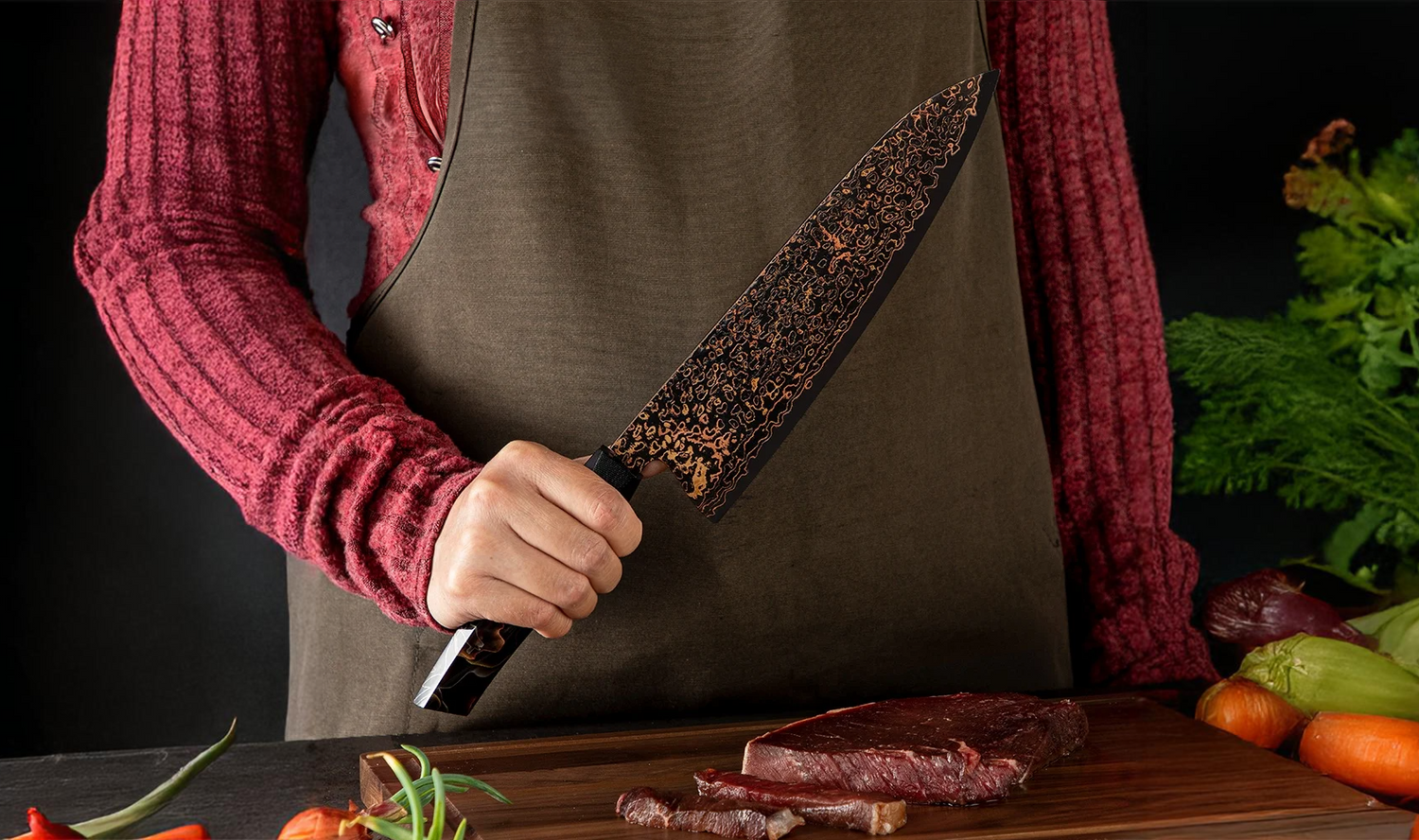
Damascus Steel Knife: Is It Worth It?
If you have been researching premium kitchen knives, you have probably come across the question: is a Damascus steel knife worth it? Damascus knives are known for their striking layered patterns, elegant craftsmanship, and premium positioning in the kitchen knife world. But beyond the visual appeal, many home cooks and chefs want to know whether a Damascus steel kitchen knife actually performs better, lasts longer, and justifies the higher price.
The short answer is: yes, a Damascus steel knife can absolutely be worth it — especially if you value sharpness, edge retention, refined craftsmanship, and a premium look. However, the right choice depends on your cooking style, your maintenance habits, and what you expect from your knife.
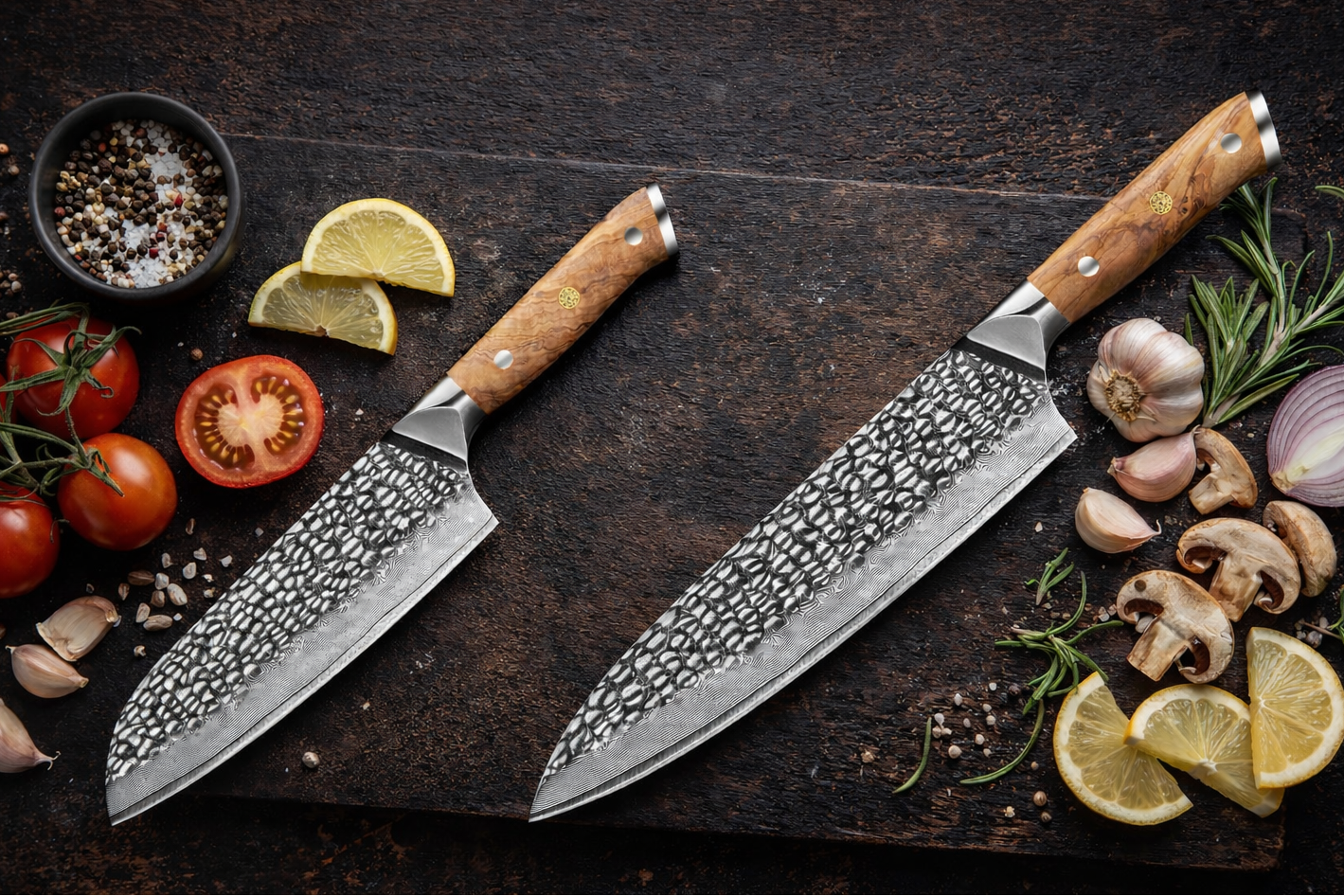
At Hikari Knife, Damascus steel is one of the key materials and finishes featured across a wide range of premium Japanese-style kitchen knives. Whether you are looking for a versatile Chef Knife, a precise Santoku Knife, or want to explore the full Damascus Steel collection, understanding what makes Damascus steel special will help you choose more confidently.
What Is a Damascus Steel Knife?
A Damascus steel knife is a knife that features a layered steel construction or Damascus-style finish that creates the distinctive flowing, wavy pattern many people associate with premium Japanese knives. One of the reasons Damascus knives stand out so much is that no two patterns look exactly the same, giving each blade a more unique and handcrafted appearance.
At Hikari, Damascus is already presented as a premium finish and material category, known for its beautiful patterned surface, sharp cutting performance, and strong edge retention. In your own blade finishes guide, Damascus is described as involving multiple layers of steel forged together to create that distinctive wave-like pattern, while also supporting a balance of hardness, flexibility, and performance. That makes Damascus attractive not only visually, but also functionally for serious kitchen use.
So when people ask, “What is a Damascus steel knife?”, the answer is not just about looks. It is about a knife that combines craftsmanship, layered blade character, sharpness, and premium presentation.

Why Damascus Steel Knives Are So Popular
Damascus kitchen knives have become especially popular because they combine two things that many buyers want at the same time: high performance and visual impact. A lot of knives can cut well. Far fewer also look elegant enough to feel like a statement piece in the kitchen.
That is a major reason Damascus knives are often chosen by:
- Home cooks upgrading from basic knives
- Chefs who want premium everyday tools
- Gift buyers looking for a memorable kitchen knife
- Collectors who appreciate blade craftsmanship
On Hikari, the Damascus category spans many knife types — including chef knives, santoku knives, kiritsuke knives, petty knives, nakiri knives, boning knives, steak knives, cleavers, and more — which shows how central Damascus has become to premium kitchen knife buying. That breadth also makes it a strong material category for internal linking and SEO.

Damascus Steel Knife Pros
If you are wondering whether a Damascus steel knife is worth buying, the advantages are the first place to look.
1. Premium Blade Appearance
The most obvious benefit is the look. The layered pattern of a Damascus blade gives it a refined, high-end appearance that stands out immediately. If you want a kitchen knife that feels special every time you use it, Damascus delivers that luxury impression better than many plain blade finishes.
2. Strong Cutting Performance
Damascus knives are popular not just because they are beautiful, but because they are often built around performance-focused steels and precise blade geometry. On Hikari, Damascus pages consistently position these knives around sharpness, durability, and edge retention, which are exactly the qualities many cooks are searching for in a serious kitchen knife.
3. Excellent Gift Appeal
If you are buying for a chef, a cooking enthusiast, or someone who appreciates premium kitchen tools, a Damascus knife feels more memorable than an ordinary knife. The combination of craftsmanship, elegant materials, and visual texture gives it a stronger premium identity.
4. Wide Range of Knife Types
Damascus steel is not limited to one blade profile. Whether you want a multi-purpose chef knife, a vegetable-focused nakiri, a compact petty knife, or a slicing knife for meat and fish, you can find Damascus options across many categories. That makes it easier to match the material to your actual cooking needs instead of buying based on appearance alone.
5. Strong Edge Retention on Premium Models
Many Damascus knives are built around high-performing core steels such as VG-10. In Hikari’s own materials guide, VG-10 is described as offering strong edge retention, good hardness, and corrosion resistance, which helps explain why Damascus knives built around VG-10 cores are so appealing to cooks who want long-lasting sharpness.
Damascus Steel Knife Cons
A Damascus knife can absolutely be worth it, but it is not the perfect knife for every buyer. Like any premium kitchen knife, it also comes with trade-offs.
1. Higher Price
Damascus steel knives are usually more expensive than entry-level knives. That is partly because of the materials, partly because of the manufacturing complexity, and partly because premium Damascus knives are positioned as higher-end products. If your goal is simply to buy the cheapest functional knife possible, Damascus may not be the best value choice for you.
2. Maintenance Still Matters
Even when a Damascus knife uses corrosion-resistant steel, good care is still important. On Hikari’s product pages, buyers are advised to wipe knives dry after washing, avoid the dishwasher, and use wooden or soft plastic cutting boards to protect the edge. So while Damascus can be practical for daily use, it is still a premium tool that benefits from proper maintenance.
3. Not Every Damascus Knife Is the Same
One important point buyers often miss is that “Damascus” does not automatically tell you everything about performance. The core steel, hardness, grind, handle, and intended use all matter too. Even on Hikari, Damascus knives vary by knife type, blade construction, and handle material, so shoppers should look at the full product details rather than assuming every Damascus knife performs identically.
4. Harder Steels Can Require More Care
In Hikari’s blade materials guide, VG-10 is described as having strong hardness and edge retention, but also greater brittleness compared with softer steels if mishandled. That means premium Damascus knives should be used correctly — not twisted through hard material, used on bones, or treated like rough utility tools.

Is Damascus Steel Better Than Stainless Steel?
This depends on what you mean by “better.” A lot of Damascus kitchen knives are also made with stainless or stainless-based core steels, so the comparison is not always as simple as Damascus versus stainless. In practice, Damascus often refers to the layered construction or blade finish, while the core steel helps determine much of the knife’s actual cutting behavior.
If you are comparing a premium Damascus knife to a basic stainless steel knife, the Damascus option will often feel more refined in terms of craftsmanship, presentation, and edge character. But if your top priority is very low maintenance and budget-friendly practicality, a simpler stainless steel knife may still suit you better.
That is why the best buying question is usually not just “Damascus or stainless steel?” but rather “Which knife construction, steel, and blade style best fits how I cook?”
Is a Damascus Steel Knife Good for Everyday Cooking?
Yes — a Damascus steel knife can be an excellent everyday kitchen knife, especially if you choose the right profile for your needs. Many home cooks use Damascus chef knives, santoku knives, nakiri knives, and petty knives as daily drivers because they combine premium sharpness with the kind of versatility needed for vegetables, herbs, fish, boneless meats, and general prep.
At Hikari, the Damascus range already includes all of these categories, making it easy to choose a knife that fits how you actually cook. A Damascus Chef Knife is usually the best all-purpose option, while a Damascus Nakiri Knife may be especially attractive if you prepare a lot of vegetables.
When a Damascus Steel Knife Is Worth It
A Damascus steel knife is worth it if you care about more than just basic cutting ability.
It is especially worth it if you want:
- A premium-looking knife with a distinctive patterned blade
- Strong sharpness and edge retention
- A refined gift for a chef or cooking enthusiast
- A kitchen tool that combines beauty and performance
- A knife that feels special in everyday use
If that sounds like what you want from your kitchen tools, then Damascus is not just a visual upgrade — it is often a satisfying long-term purchase.
When a Damascus Steel Knife May Not Be Worth It
A Damascus knife may not be the best choice if:
- You want the lowest possible price
- You prefer very low-maintenance tools and do not want to think about knife care
- You need a rough utility blade for hard use rather than a refined kitchen knife
- You are buying only for appearance and not paying attention to knife type, steel, and intended use
In other words, Damascus is usually worth it for buyers looking for a better cooking experience, but not always for someone shopping only by budget.
How to Choose the Right Damascus Steel Knife
If you have decided that Damascus is worth considering, the next step is choosing the right type of knife.
Choose a Damascus Chef Knife if:
You want one versatile knife for slicing, chopping, dicing, and everyday meal prep.
Choose a Damascus Santoku if:
You want compact all-purpose performance for vegetables, fish, boneless meat, and home cooking.
Choose a Damascus Nakiri if:
You prepare a lot of vegetables and want straight, efficient cuts with excellent board contact.
Choose a Damascus Petty Knife if:
You want a smaller knife for trimming, peeling, herbs, and precise kitchen tasks.
You can browse Hikari’s full Damascus Steel collection to compare different blade styles, materials, and handle designs.

How to Care for a Damascus Steel Knife
To get the most from a Damascus kitchen knife, proper care matters. A few good habits can help maintain both the cutting performance and the premium finish.
- Wash by hand rather than using a dishwasher
- Dry the knife after washing
- Use a wooden or soft plastic cutting board
- Avoid twisting motions or cutting very hard materials
- Store the knife safely to protect the edge and blade finish
These habits are especially important for premium knives with harder steels and fine edges. Good maintenance helps preserve the sharpness, appearance, and lifespan of the blade.
Final Verdict: Is a Damascus Steel Knife Worth It?
Yes — for many cooks, a Damascus steel knife is absolutely worth it.
If you want a knife that delivers premium design, strong cutting performance, elegant craftsmanship, and a more refined cooking experience, Damascus is one of the most appealing choices in the kitchen knife world.
It is especially worth it for buyers who appreciate:
- Beautiful layered blade patterns
- Sharp, precise performance
- High-end gift appeal
- Long-term satisfaction in daily kitchen use
If you are ready to explore premium Japanese-style knives, browse Hikari’s Damascus Steel Knives collection and discover Damascus chef knives, santoku knives, nakiri knives, petty knives, and more.
Frequently Asked Questions
Are Damascus steel knives worth the money?
Yes, they can be worth the money if you value premium craftsmanship, strong cutting performance, edge retention, and a distinctive blade design. They are especially appealing to cooks who want both function and aesthetics.
Is Damascus steel good for kitchen knives?
Yes. Damascus is popular in kitchen knives because it combines premium visual appeal with strong cutting performance, especially when paired with quality core steels such as VG-10.
Do Damascus steel knives stay sharp?
Many premium Damascus knives offer very good edge retention, particularly when they use harder, performance-focused core steels. Exact sharpness and retention depend on the knife’s construction and how it is maintained.
Are Damascus knives only for looks?
No. While their layered pattern is a major reason people love them, Damascus knives are also chosen for their craftsmanship, sharpness, and premium overall feel.
What is the best Damascus knife for beginners?
A Damascus chef knife or Damascus santoku is often the best place to start, depending on whether you want a classic all-purpose blade or a slightly more compact multi-purpose knife.
Related Reading
To learn more about blade construction and knife materials, read our guides on Exploring Knife Blade Finishes and Understanding Knife Blade Materials.




Leave a comment
This site is protected by hCaptcha and the hCaptcha Privacy Policy and Terms of Service apply.