
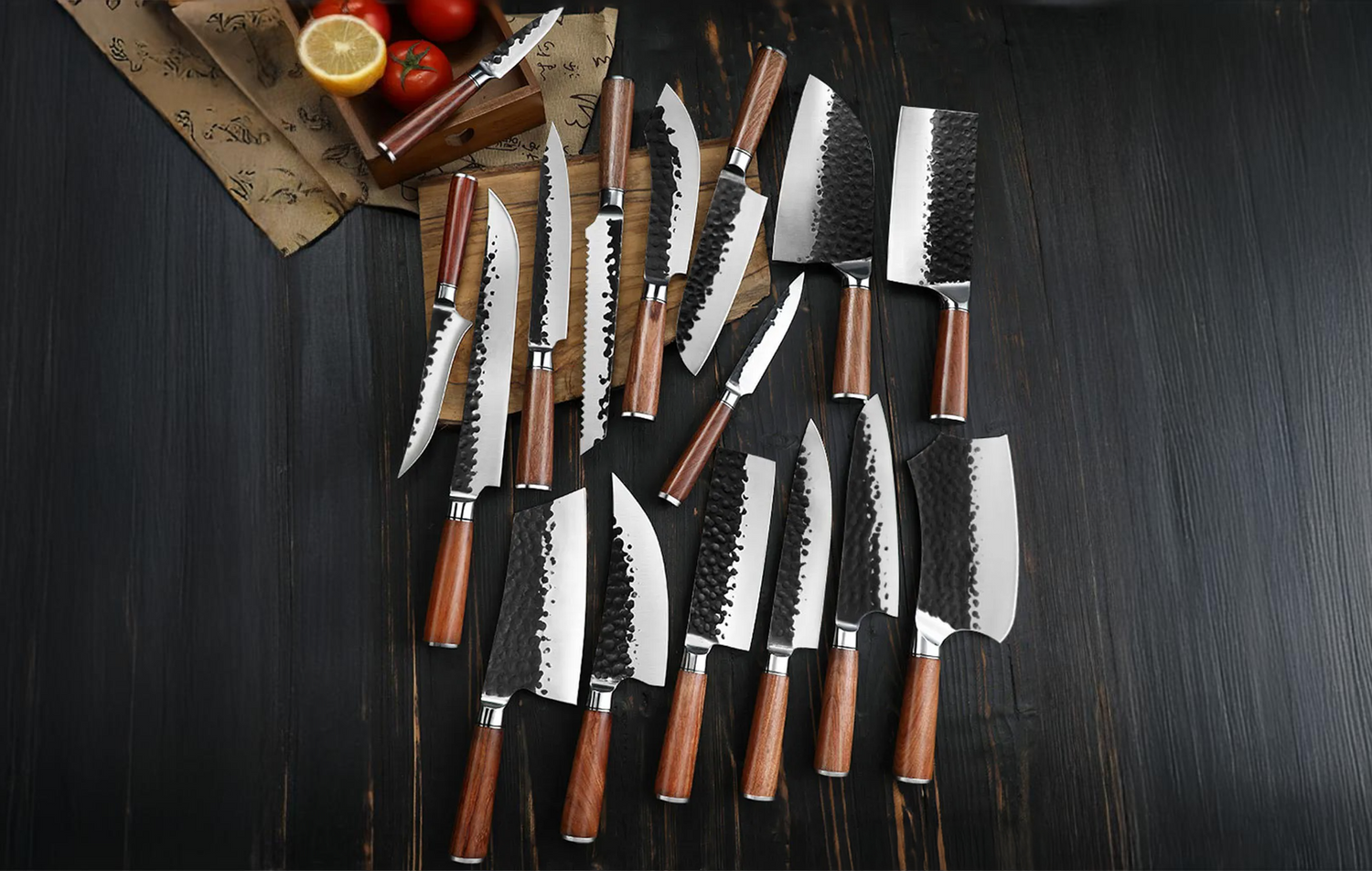
Which Kitchen Knife Should You Buy First?
If you are building your kitchen from scratch or finally upgrading from basic blades, one of the most common questions is: which kitchen knife should you buy first? With so many knife types available — Chef Knife, Santoku, Nakiri, Petty, Paring, Bread Knife, Boning Knife, and more — it can be hard to know where to start.
The good news is that most people do not need a full knife set right away. In most kitchens, the best first knife is a versatile all-purpose blade that can handle everyday cutting tasks with confidence. For many cooks, that means starting with either a Chef Knife / Gyuto or a Santoku Knife.
At Hikari Knife, both options are already positioned as highly practical kitchen essentials. The Gyuto / Chef Knife is presented as a professional all-purpose knife that excels at slicing, chopping, and dicing a wide range of ingredients, while the Santoku is described as an all-purpose Japanese knife that combines precision, control, and efficiency for meat, fish, and vegetables. That makes them the two strongest starting points for most home cooks.
The Short Answer: What Knife Should You Buy First?
If you want the simplest answer possible:
- Buy a Chef Knife first if you want the most versatile all-purpose knife for everyday cooking.
- Buy a Santoku first if you want a slightly shorter, more controlled knife that still handles most kitchen tasks beautifully.
For most beginners, these are the two best first knives because they can cover the largest number of kitchen jobs without forcing you to buy several specialized blades right away.

Why Your First Kitchen Knife Should Be Versatile
When buying your first serious knife, versatility matters more than specialization. A first knife should help you prepare:
- Vegetables
- Herbs
- Fruit
- Boneless meat
- Fish
- Everyday meals in general
That is why all-purpose knives are the best place to start. Specialized knives like a Nakiri, Boning Knife, or Bread Knife are excellent tools, but they solve more specific problems. A beginner usually gets more value by starting with one knife that can do almost everything.
Best First Knife Overall: Chef Knife / Gyuto
For many people, the best answer to “Which kitchen knife should I buy first?” is a Chef Knife.
The Gyuto, often referred to as a Japanese chef’s knife, is one of the most versatile knives in the kitchen. On Hikari’s own guide, it is described as an essential tool with a curved edge and pointed tip that excels at slicing, chopping, and dicing. On the Chef Knife collection page, it is also positioned as a professional all-purpose knife for meat, fish, vegetables, and herbs.
This makes a Chef Knife the strongest first choice for people who want:
- One knife for almost everything
- A classic all-purpose kitchen blade
- A longer blade with more reach
- A pointed tip for detail work
- A curved edge for rocking cuts
If you cook often and want one knife to become your daily workhorse, a Chef Knife is usually the safest and smartest starting point.

Best First Knife for Control: Santoku Knife
If you want something a little more compact and beginner-friendly, a Santoku Knife may be the better first purchase.
Hikari’s site describes the Santoku as an all-purpose Japanese knife designed for meat, fish, and vegetables, combining the strengths of the Nakiri and Gyuto while offering precision, control, and efficiency. In the knife types guide, it is also described as ideal for slicing, dicing, and mincing, with a slightly shorter, wider blade than the Gyuto and a shape that supports excellent control.
A Santoku is a great first knife if you want:
- A versatile multi-purpose knife
- A slightly shorter blade
- Excellent control and balance
- A knife that feels approachable for beginners
- Strong performance for vegetables, fish, and boneless meat
For many home cooks, the Santoku feels easier to manage than a larger Chef Knife while still covering nearly all daily prep tasks.

Chef Knife vs Santoku: Which Should You Buy First?
If you are stuck between the two, use this simple rule:
Choose a Chef Knife first if you want maximum versatility, more blade length, and a classic all-round kitchen knife that can do almost everything.
Choose a Santoku first if you want a versatile knife that feels more compact, more controlled, and especially comfortable for everyday home cooking.
Both are excellent first knives. The best one depends on your comfort preferences and cooking style.
Should You Buy a Nakiri First?
A Nakiri Knife is an outstanding kitchen tool, but for most people it is not the best first knife.
Hikari’s Nakiri pages describe it as a traditional Japanese knife designed specifically for cutting vegetables, with a flat, rectangular blade and straight edge for precise, clean cuts. That makes it excellent for vegetable prep, but less versatile as a first and only knife.
You should consider buying a Nakiri first only if:
- You cook vegetables constantly
- You rarely prepare meat or fish
- You want a dedicated produce knife above all else
Otherwise, a Chef Knife or Santoku will usually give you more flexibility.

Should You Buy a Petty or Utility Knife First?
Usually, no.
A Petty / Utility Knife is very useful, but Hikari’s own category page describes it as a small kitchen knife for precision tasks and specifically notes that it is recommended as a second knife. It is ideal for peeling, trimming, and slicing small ingredients, but it is not the best single knife for broad kitchen prep.
A Petty knife is best added after your first all-purpose blade, especially if you want a second knife for:
- Peeling and trimming
- Small fruits and vegetables
- Delicate cuts
- Precision kitchen work
![Petty / Utility [Small Knives] - Utility Knife - Japanese-Style, VG -10 Steel, Hammered Copper Damascus, Resin Handle – Professional Kitchen Knife - Hikari](https://cdn.shopify.com/s/files/1/0827/2461/8572/files/EK2A1770.jpg?v=1733218796)
Should You Buy a Paring Knife First?
A Paring Knife is another valuable kitchen tool, but for most people it should come after their first main knife.
On Hikari’s site, the paring knife is positioned as essential for precision tasks like peeling, trimming, and slicing fruits and vegetables. It offers excellent control, but its short blade makes it too specialized to serve as your only kitchen knife.
A paring knife is a smart second or third purchase, not usually the first one.

Should You Buy a Bread Knife First?
A Bread Knife should usually be your first knife only if you regularly slice bread, pastries, cakes, or delicate foods with soft interiors and tough exteriors.
Hikari describes the bread knife as a serrated blade designed to cut through crusty bread and soft baked goods without crushing them. It is excellent at that job, but it is too specialized to replace a proper all-purpose kitchen knife for most households.

Should You Buy a Boning Knife First?
A Boning Knife is not usually the best first knife unless you frequently break down meat, poultry, or fish yourself.
In Hikari’s knife guide, the boning knife is described as having a narrow, flexible blade designed for removing bones and making precise cuts around joints and flesh. That is a very useful task-specific tool, but not the most practical choice as your main starting knife.

What About a Kiritsuke as a First Knife?
A Kiritsuke Knife can be a fantastic knife, but it is often better suited to people who already know what they like in the kitchen.
Hikari’s guide describes the Kiritsuke as a hybrid between a chef’s knife and a slicer, able to handle fish, vegetables, and carving tasks, and notes that it is a favorite among experienced chefs. That makes it a strong option for enthusiasts, but not always the most beginner-friendly first purchase compared with a Chef Knife or Santoku.

The Best Order to Build Your Knife Collection
If you want a practical beginner roadmap, this is one of the best ways to build your collection:
1. Start with a Chef Knife or Santoku
This gives you the all-purpose knife you will use most often.
2. Add a Petty or Paring Knife
This gives you precision for smaller tasks and ingredients.
3. Add a Specialized Knife Based on How You Cook
- Nakiri if you prepare lots of vegetables
- Bread Knife if you slice bread and baked goods often
- Boning Knife if you work with meat, poultry, or fish regularly
- Kiritsuke if you want a more advanced versatile blade
This approach keeps your first purchase simple and useful while allowing you to expand your setup intelligently over time.
How to Choose the Right First Knife for You
Before you buy, ask yourself these questions:
- Do I want one knife for almost everything?
- Do I prefer a longer blade or a more compact one?
- Do I cook more vegetables, more meat, or a bit of everything?
- Do I want maximum versatility or a very specific tool?
If you cook a mix of ingredients and want the safest all-around answer, start with a Chef Knife.
If you want a versatile everyday blade that feels especially balanced and controlled, start with a Santoku Knife.
If you want to browse all options before deciding, explore the full Hikari Knife collection.
Final Verdict: Which Kitchen Knife Should You Buy First?
For most people, the best first kitchen knife is either a Chef Knife / Gyuto or a Santoku Knife.
Buy a Chef Knife first if you want:
- The most versatile all-purpose option
- A classic kitchen workhorse
- One knife that can handle nearly everything
Buy a Santoku first if you want:
- A multi-purpose knife with great control
- A slightly shorter, more approachable blade
- Excellent everyday performance for home cooking
For most beginners, you should not start with a Nakiri, Petty, Paring, Bread, or Boning Knife unless your cooking habits are highly specific. Those knives are excellent additions later, but an all-purpose blade is usually the smartest first investment.
If you are ready to choose your first serious knife, start with Hikari’s Chef Knives or Santoku Knives, then build out your collection as your cooking style becomes more specialized.
Frequently Asked Questions
What is the best kitchen knife for beginners?
For most beginners, the best first kitchen knife is a Chef Knife or a Santoku Knife because both are highly versatile and suitable for everyday cooking.
Should I buy a Chef Knife or Santoku first?
Buy a Chef Knife first if you want maximum versatility and a classic all-purpose blade. Buy a Santoku first if you want a slightly shorter knife with excellent control and strong everyday usability.
Is a Nakiri a good first knife?
A Nakiri can be a good first knife if you mainly prepare vegetables, but for most people it is better as a second or third knife because it is more specialized.
Should I buy a paring knife first?
No, usually not. A paring knife is very useful for small precise tasks, but most people should start with a larger all-purpose knife first.
What knife should I buy after my first one?
After your first Chef Knife or Santoku, a Petty / Utility Knife or Paring Knife is often the best next addition because it helps with smaller precision tasks.
Related Reading
Want to understand the differences between knife types in more detail? Read our guide on Discovering Knife Types.





Leave a comment
This site is protected by hCaptcha and the hCaptcha Privacy Policy and Terms of Service apply.